Free Articles
A selection of USI library articles available to everyone. No account required.

Ice, heat, rest: the minor-injury decision that most parents get wrong.
Your child limps off the field clutching their ankle, and you're already mentally scrolling through what's in the freezer. Ice first or heat first? Getting it wrong could mean sitting out the rest of the season.
Read article →
The header restriction in junior football: which states have limits at which ages.
Heading the ball is restricted in junior Australian football because of growing evidence on cumulative head impact. Football Australia sets the national framework. State bodies implement competition rules. Restrictions vary by state and age band. Here is what is allowed where, in plain language, and what to do if a coach asks your kid to break the rule.
Read article →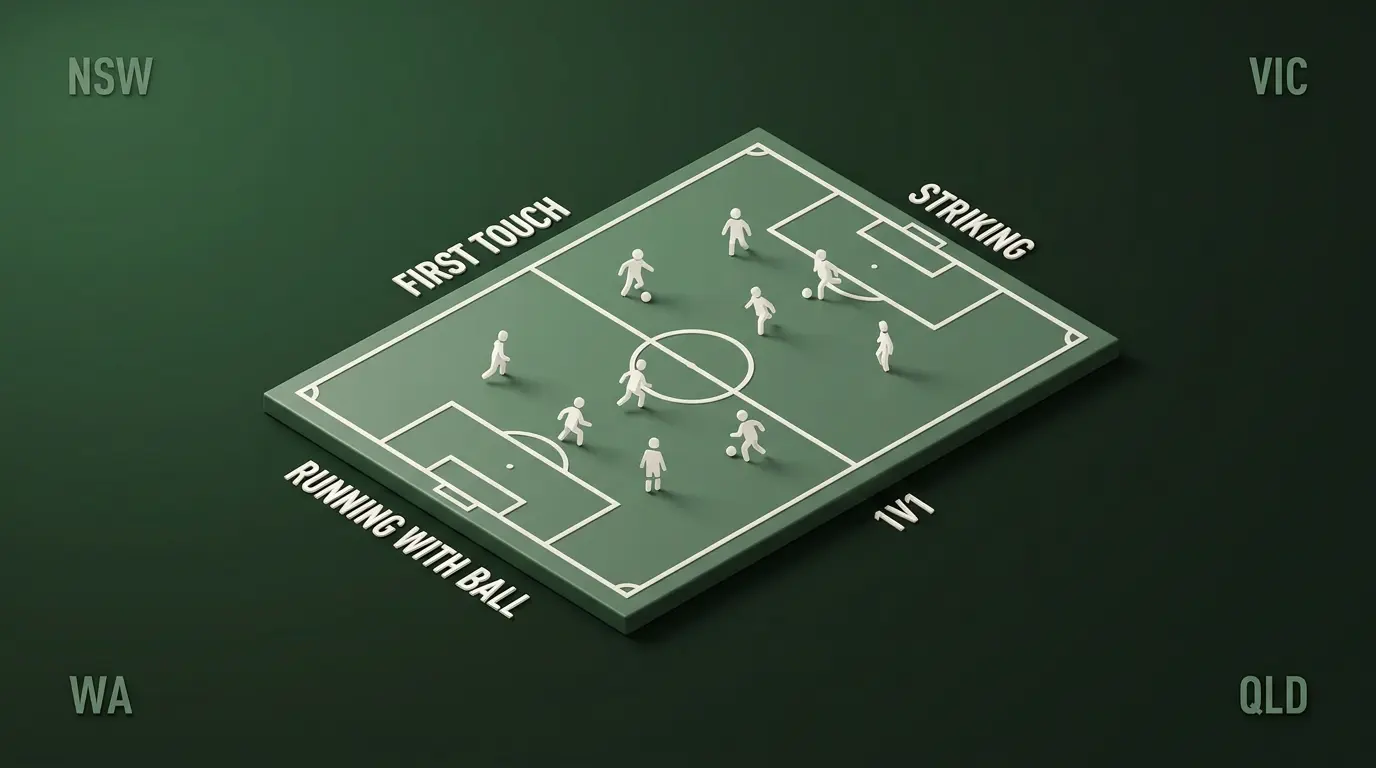
The Skill Acquisition Phase explained
SAP stands for Skill Acquisition Phase, FA's developmental concept for ages 9 to 12. What the phase means, what your state's SAP program looks like, and what the talented player pathway leads to.
Read article →
A-League academies in 2026: what they actually are and how a player gets in
An A-League academy is a professional development structure for talented young players. The A-League Youth competition is defunct. Here is how A-League clubs actually develop their youth players in 2026, how entry works, and what it costs once a player is signed.
Read article →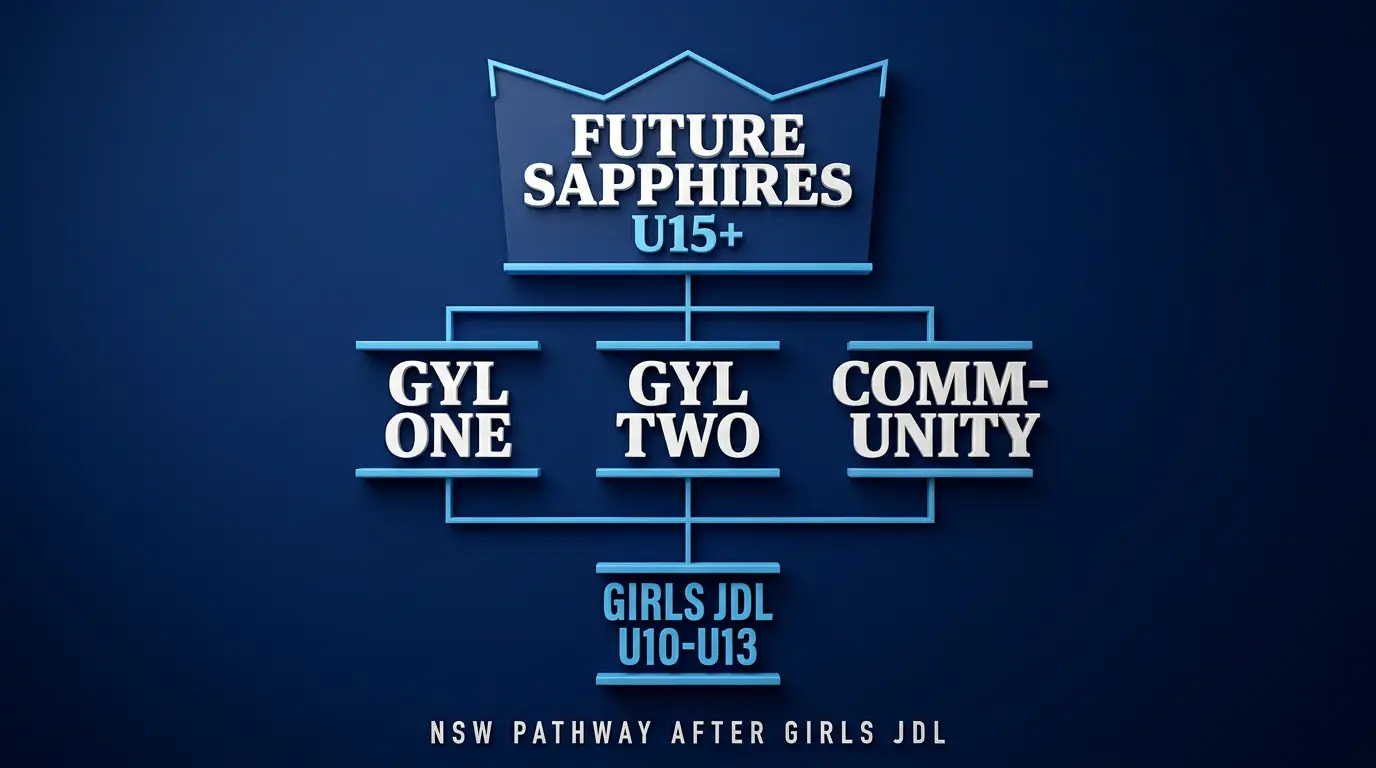
Your daughter wants to take the next step at U13. The NSW pathway after Girls JDL.
Her final season of Girls JDL ends, and trials for U14 start in October. The NSW pathway has three club-tiered options and one elite program above them all.
Read article →
NPL1 vs NPL2 for girls in NSW: legacy terminology and the new tier reality.
Names changed in 2022 when Football NSW renamed NPL2 to League One. From 2025 youth and senior decoupled. Club Standards now drive tier movement.
Read article →
US college soccer scholarship for an Australian 16-year-old: the realistic pathway, the realistic odds.
A US college recruitment agent gave the 16 year old a card at last weekend's NPL Youth game. The realistic odds, the NCAA 2025-26 scholarship cap changes, the five preconditions, and the four trip-wires that derail Australian recruits.
Read article →
A racist incident at the game yesterday: immediate response
Something happened at yesterdays game. Your child came home different. The first instinct is to call someone. The next is to write something on social media. The next is to find out who said it and confront the family. Almost every one of those instincts weakens what comes next. The 24 hour, 72 hour, one week sequence that protects your child and gets the formal pathway working.
Read article →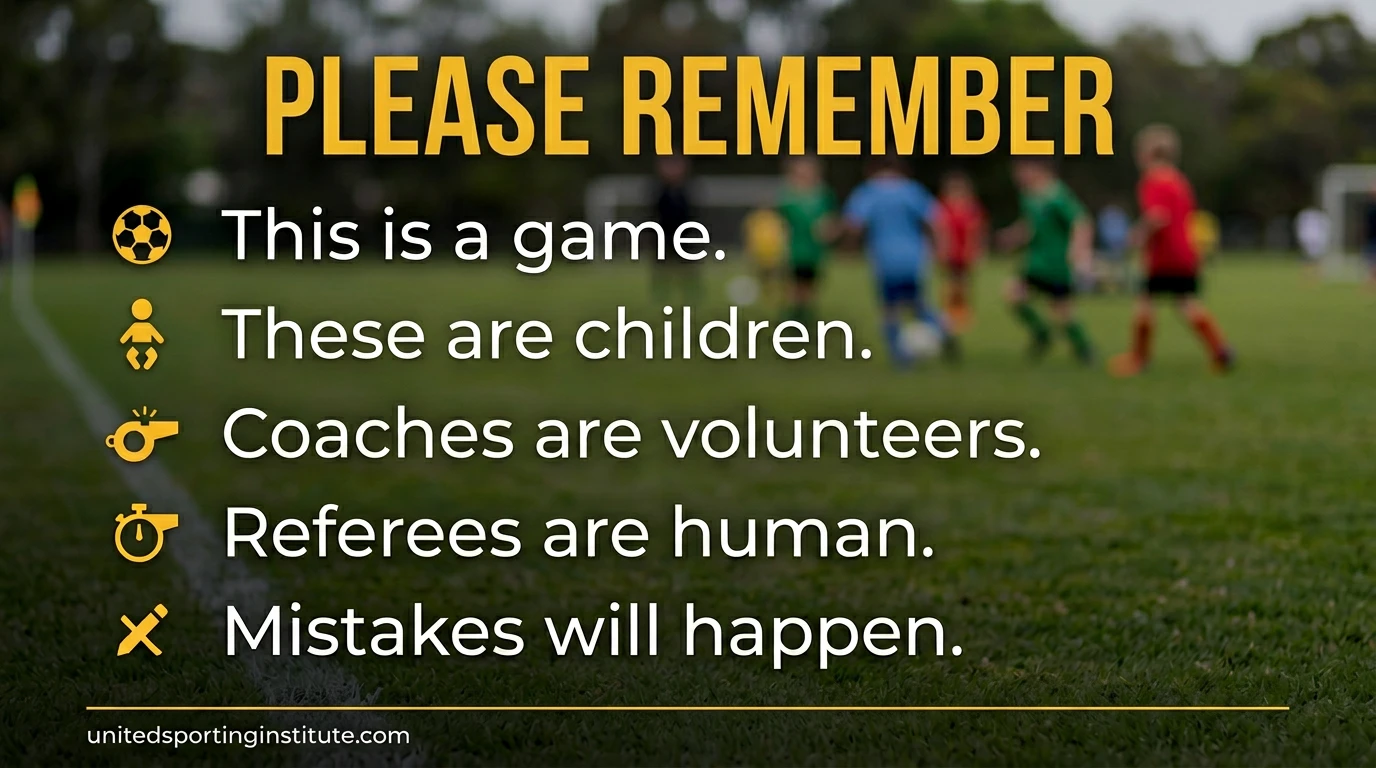
The sideline rules nobody tells you
This is a game. These are children. Coaches are volunteers. Referees are human. Mistakes will happen. The sideline rules at junior football start with five reminders, and the rest is what nobody puts on the poster, including the thing parents quietly do that costs the kids the most.
Read article →
RED-S in teenage girls: the three things every football parent should know.
You've read the signs. Now you want to know what the condition is actually called, what it does to her body, and what the medical team will say. Three things to understand, the language to use with her doctor, and why the timing of treatment matters most in adolescence.
Read article →
Is your athletic daughter eating enough? The signs worth paying attention to.
You noticed her shorts looked loose, her shin has niggled for weeks, and her period is late. The question is not whether she eats enough at meals. It is whether any fuel is left after training is done. The four signs to watch, the one that comes too late, and when to call the GP.
Read article →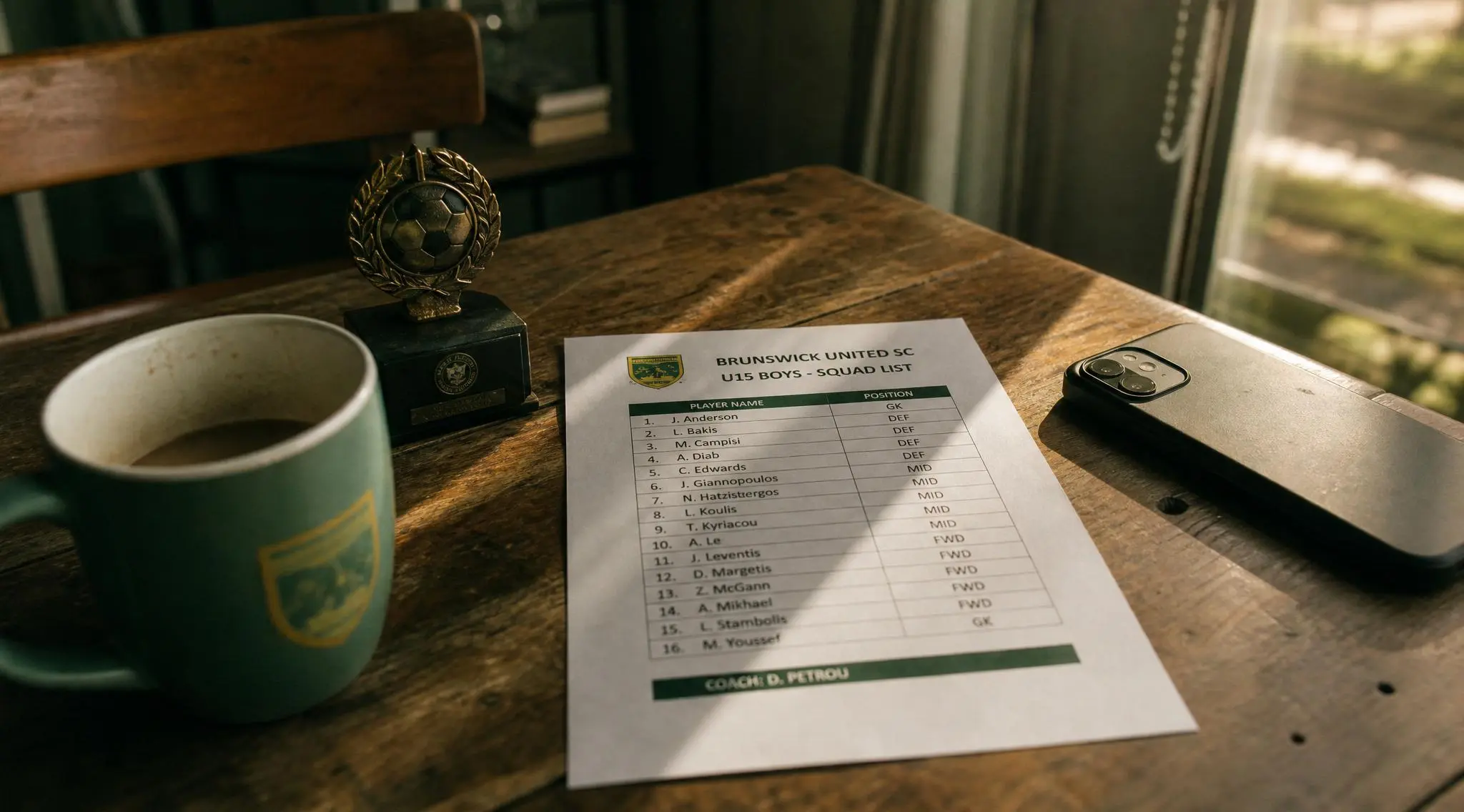
Reading selection results through the RAE lens: the question to ask.
A junior football squad list is just a list. It tells you who got picked, not how the panel got there. Here is the single question that exposes whether the relative age effect did the selection for you, four kinds of answer you might get, and what each one means for the family decision you make this week.
Read article →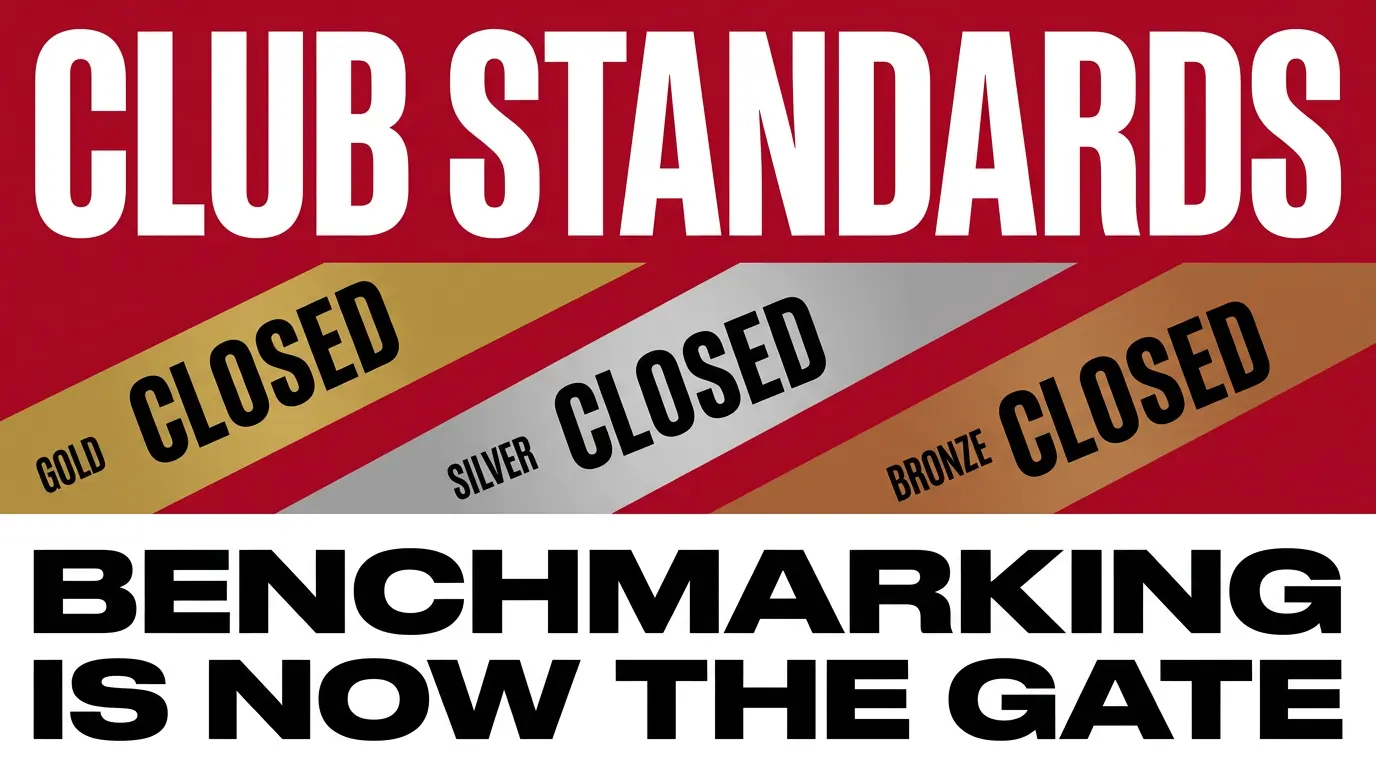
The Football NSW Club Benchmarking Standards: how they are creating a more closed pathway system and what it means for your child's chances.
Football NSW's Club Standards and Benchmarking framework now scores every Junior Development League licensee on Planning, Delivery, and Outcomes. It quietly governs which JDL club your child can join, who can coach them, and what you pay. Three lockdowns parents only notice once their options have already shrunk.
Read article →
Your JDL club cannot outsource coaching or mandate extra paid sessions: the rule that protects your child, and how to use it if yours is breaking it.
Your JDL club cannot engage private providers to coach inside the program, make extras mandatory, or charge for them outside the cap. The rule and the email.
Read article →
The JDL registration fee cap: what Football NSW says your club can charge, and three moves if yours is over.
Football NSW publishes a maximum capped Player Registration Fee. The 2025 figure was 1,736 dollars for Mixed and Girls JDL. Three steps if yours is over the cap.
Read article →
Pathway decisions at U10: the trial, the cost, and the question of when to commit
Your nine-year-old has a JDL or SAP trial invitation. The training commitment is three sessions a week. The fee is four to fifteen times community football. Football Australia itself flags the load-related injury risk of doing too much too soon. Here is what to ask, what to commit to, and what to defer in your pathway decisions at U10.
Read article →
NPL clubs vs A-League academies: the actual difference for a 2026 trial decision
NPL Junior club and A-League academy look alike from the outside. Standards, fees, entry routes and selection criteria differ. The choice is sharpest at U10 to U12 and blurs at U13 plus where A-League clubs run their academy as an NPL team. Here is the comparison side by side.
Read article →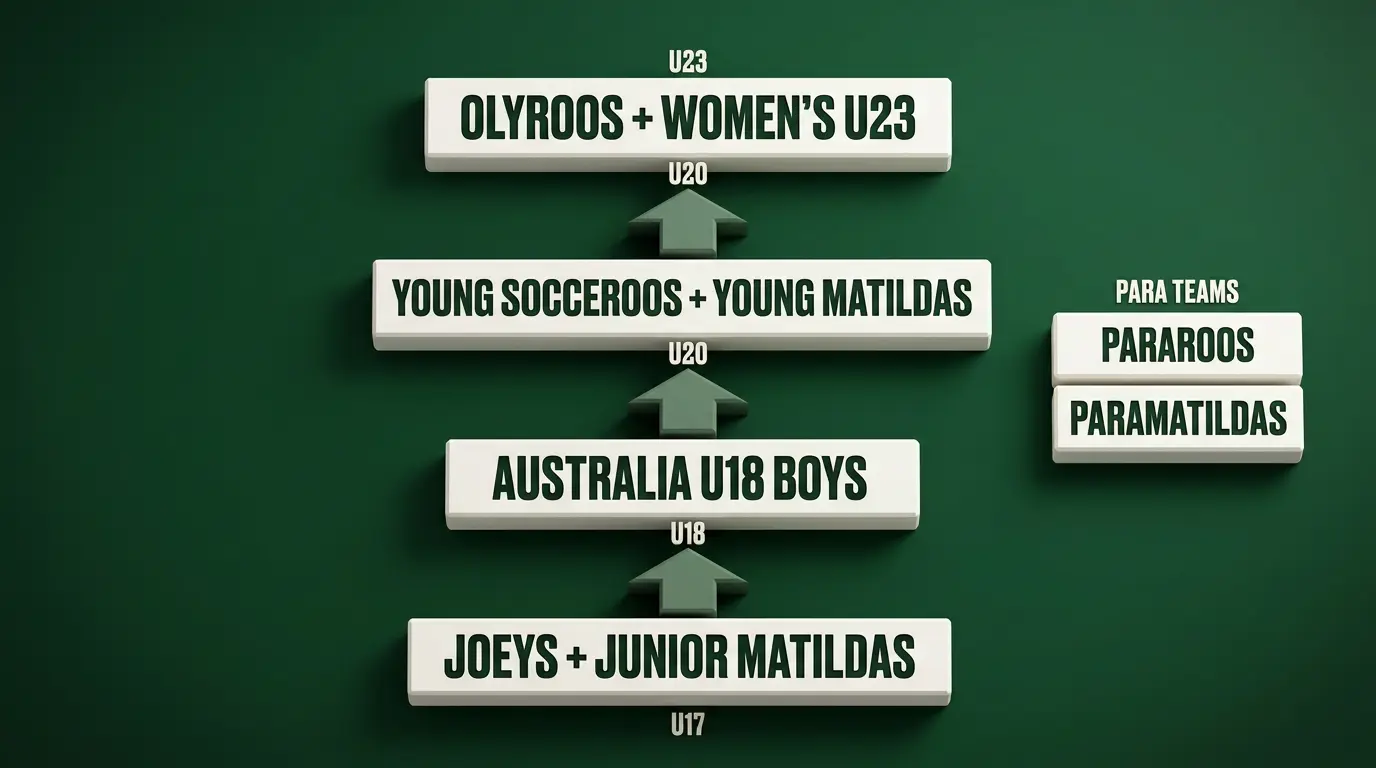
The Joeys, the Junior Matildas, the Young Matildas: Australia's junior national teams explained
Joeys, Junior Matildas, Young Socceroos, Young Matildas. The four junior national teams, the U23 layer above, the U18 squad below, and the Pararoos and ParaMatildas alongside. How a player gets noticed for the Matildas pathway.
Read article →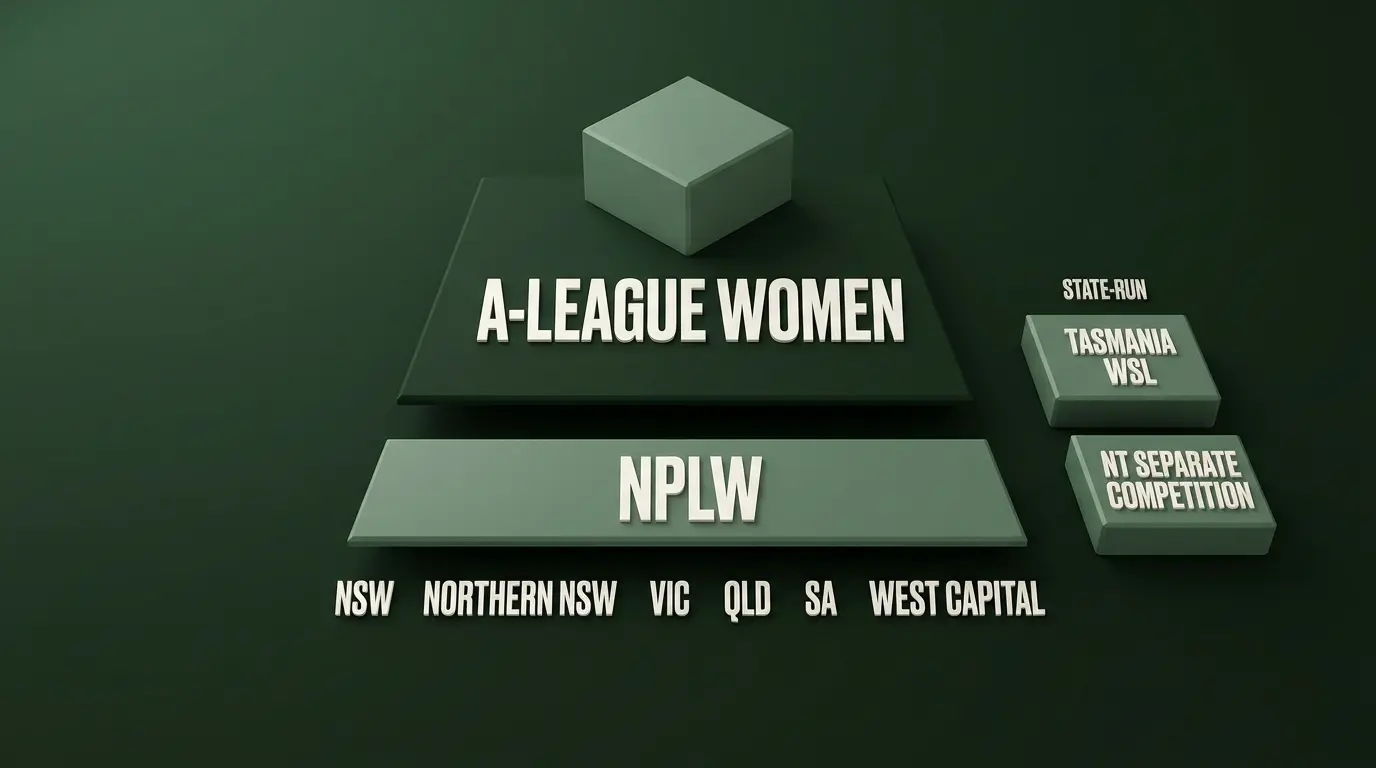
NPLW explained: what your daughter's trial actually means
NPLW is the National Premier Leagues Women's, the second tier of Australian women's football. Where it runs, what it costs, and how the Matildas pathway works from NPLW.
Read article →
NPL explained: the five-minute version for parents
Your kid's coach mentioned NPL. Here is what the National Premier Leagues is, how it changed in October 2025 when the Australian Championship launched, and what to ask first.
Read article →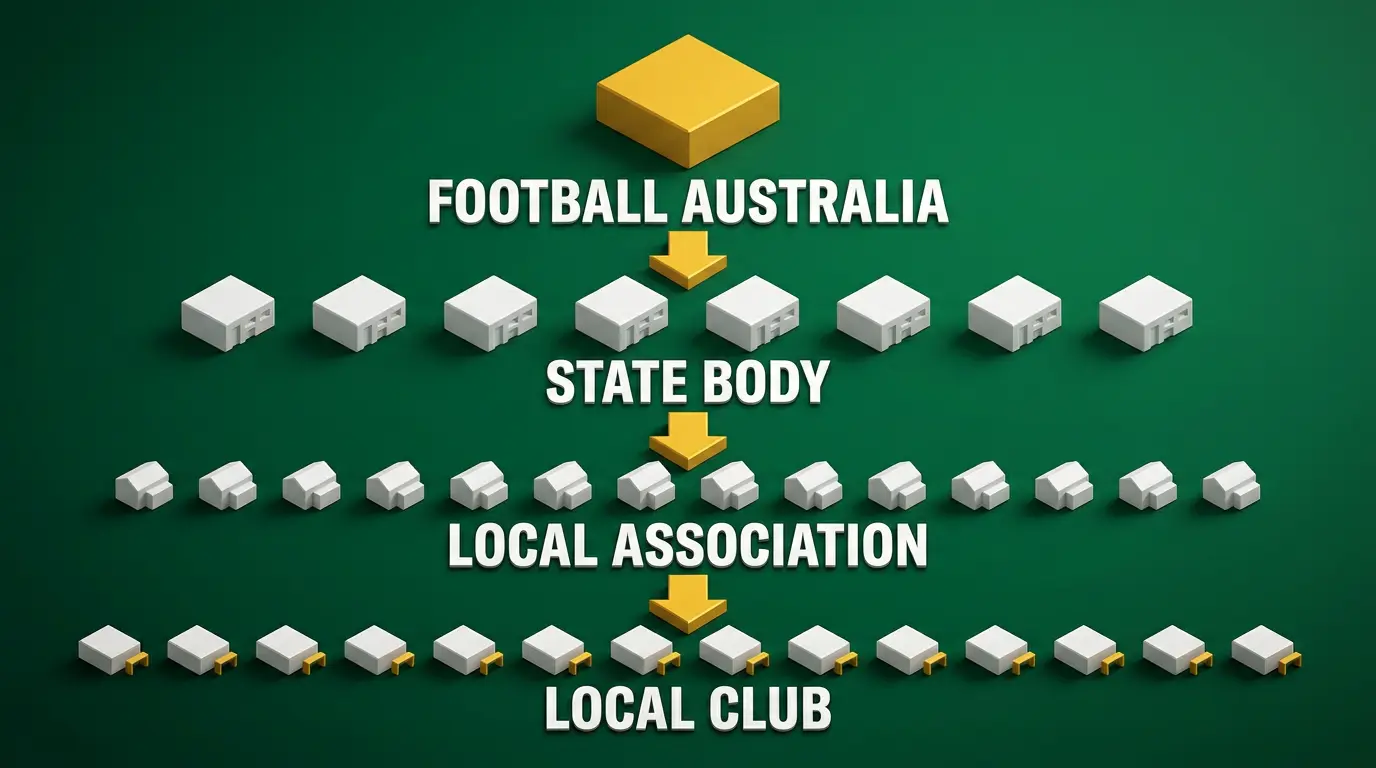
Your club, your local association, and your state body: who does what and who you actually talk to
Your kid plays for a club. The club sits inside an association. The association sits inside the state body. Who handles what, and where to take a complaint.
Read article →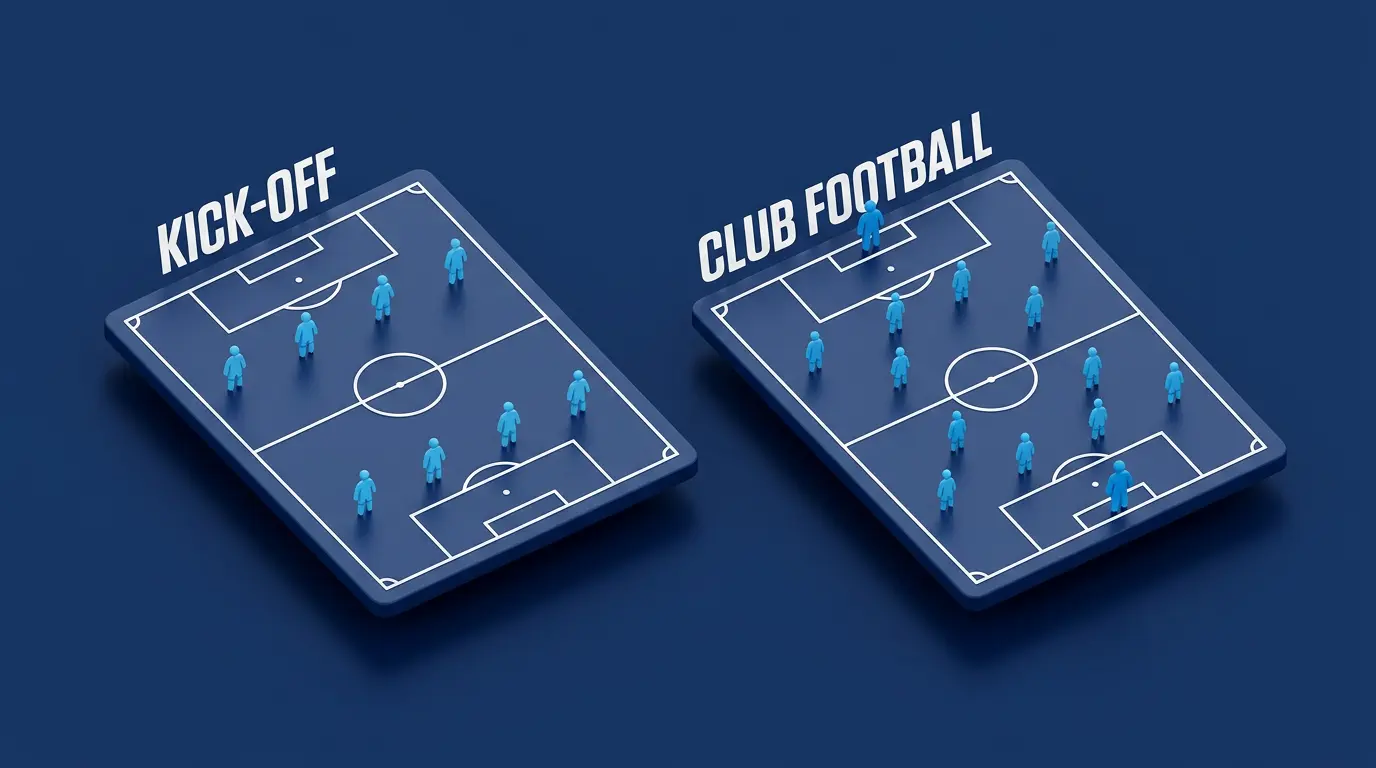
MiniRoos Kick-Off vs MiniRoos Club: the one-page difference
MiniRoos Kick-Off is the introductory program. MiniRoos Club Football is the year-round season of small-sided games. Here's the one-page difference and how to register on Play Football.
Read article →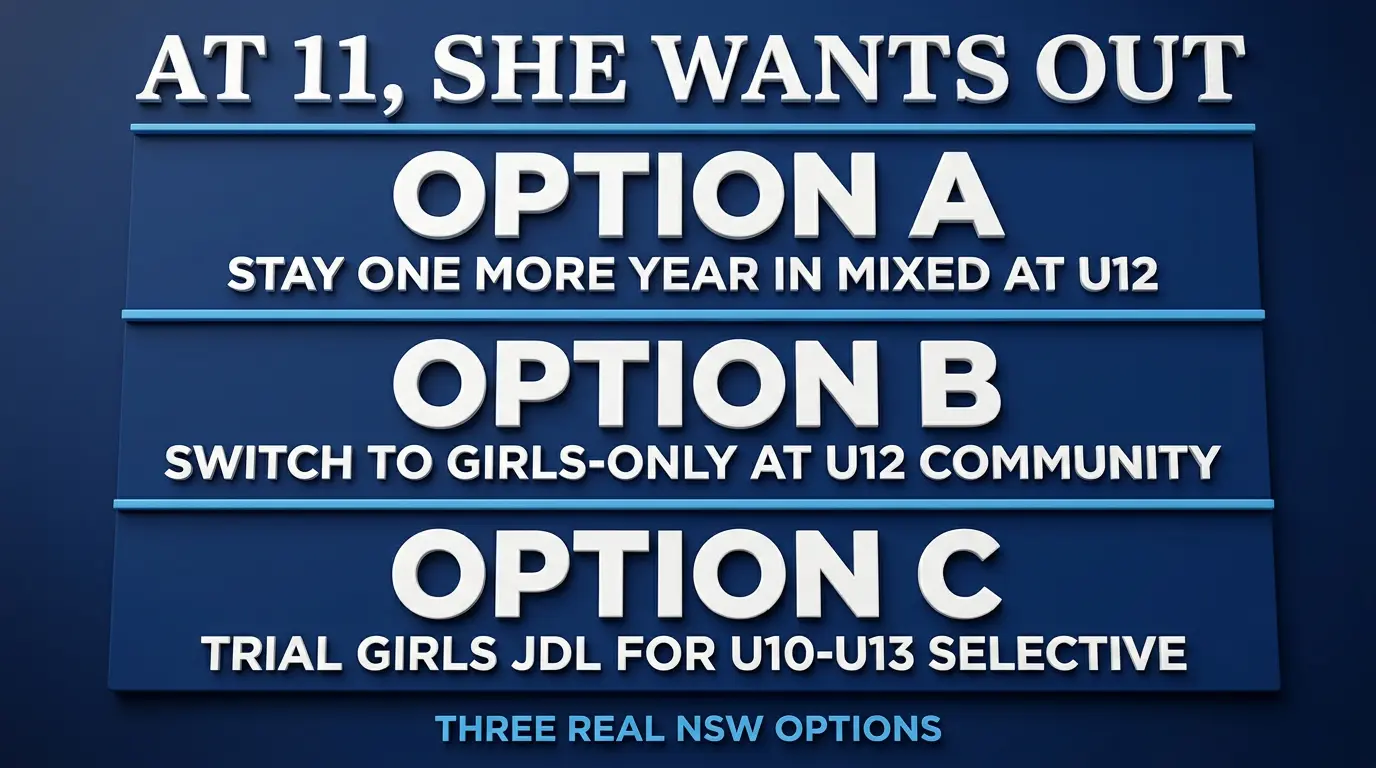
At 11, your daughter wants out of mixed football. The three real options in NSW.
She came home and said she does not want to play with the boys next year. At the top of MiniRoos, three NSW options exist. How to choose between them.
Read article →
Full Time or Part Time Girls JDL? The 2026 fee, training and pathway differences.
Your daughter just got a Girls JDL trial invite. The form asks Full Time or Part Time. The 1,109 dollar gap follows a structural choice, not a discount.
Read article →
The trial aftermath: how to manage your child through the wait.
The trial finished three days ago, the club said up to two weeks, and the kid is reaching for their phone every twenty minutes. The framework for the 7 to 21 day wait.
Read article →
The night before a trial: the three things to avoid.
It is Sunday evening, the trial is 9am tomorrow, and the kid is asking whether to do extra ball work in the backyard. The three things to avoid the night before a trial, and the three things to do instead.
Read article →
What to say driving home from a trial.
The trial is over. The kid is buckling into the back seat. The three categories of question for the drive home from a trial, and the four things to never ask.
Read article →
What to say in the car driving to a trial.
Twenty minutes in the car to the trial. The single sentence to say, and the three things to never say. Just play. Whatever happens is fine. We are proud of you for being here.
Read article →
When negativity takes over the parent group: how to protect your child from the toxic ripple effect without burning bridges.
When the parent WhatsApp group has stopped being negative on the worst nights and become negative on the default nights, the toxic ripple soaks into how your kid talks about teammates.
Read article →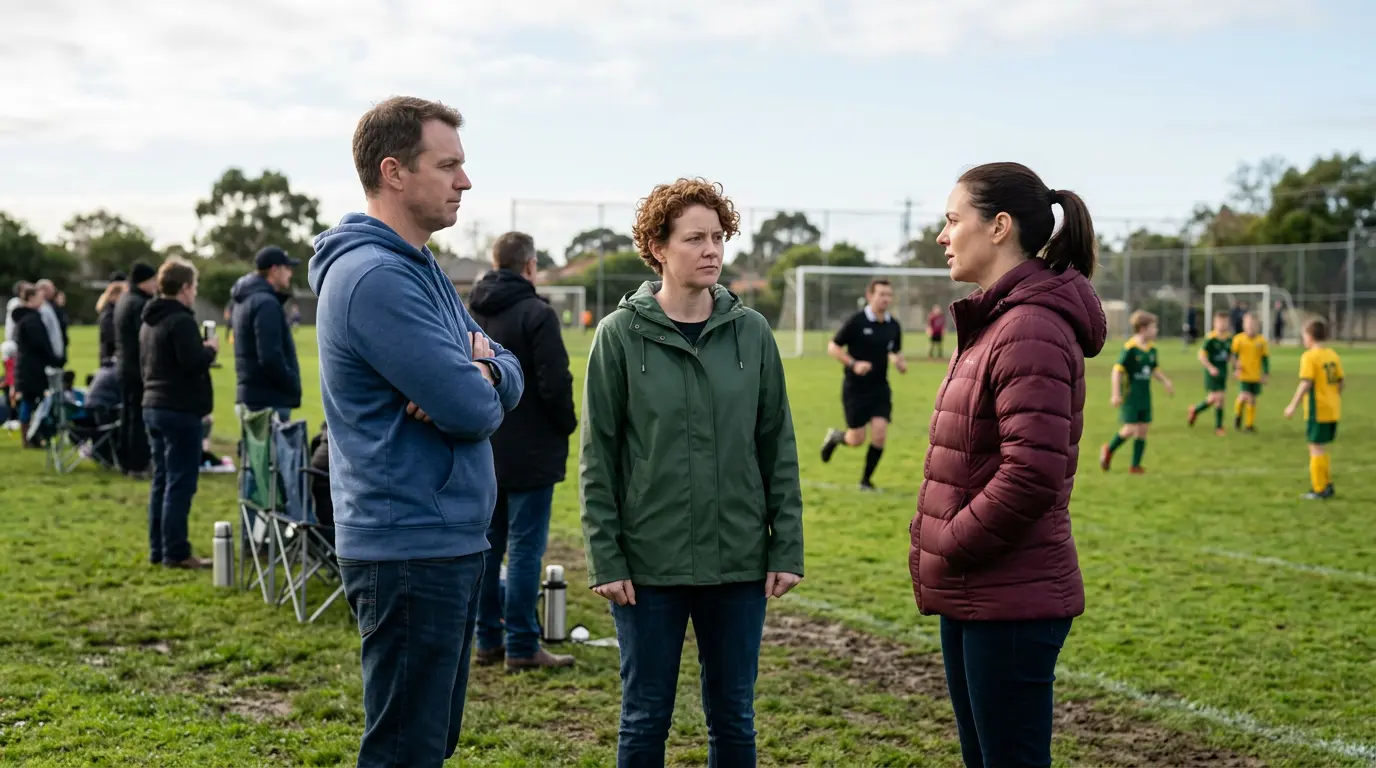
Handling sideline conflicts between parents: how to defuse, how to step away, when to escalate.
Two parents on the sideline are starting to argue. Voices are rising. Kids are looking. Other parents are pretending not to notice. You are three metres away. What you do in twenty seconds decides whether the moment is a moment or a season fracture.
Read article →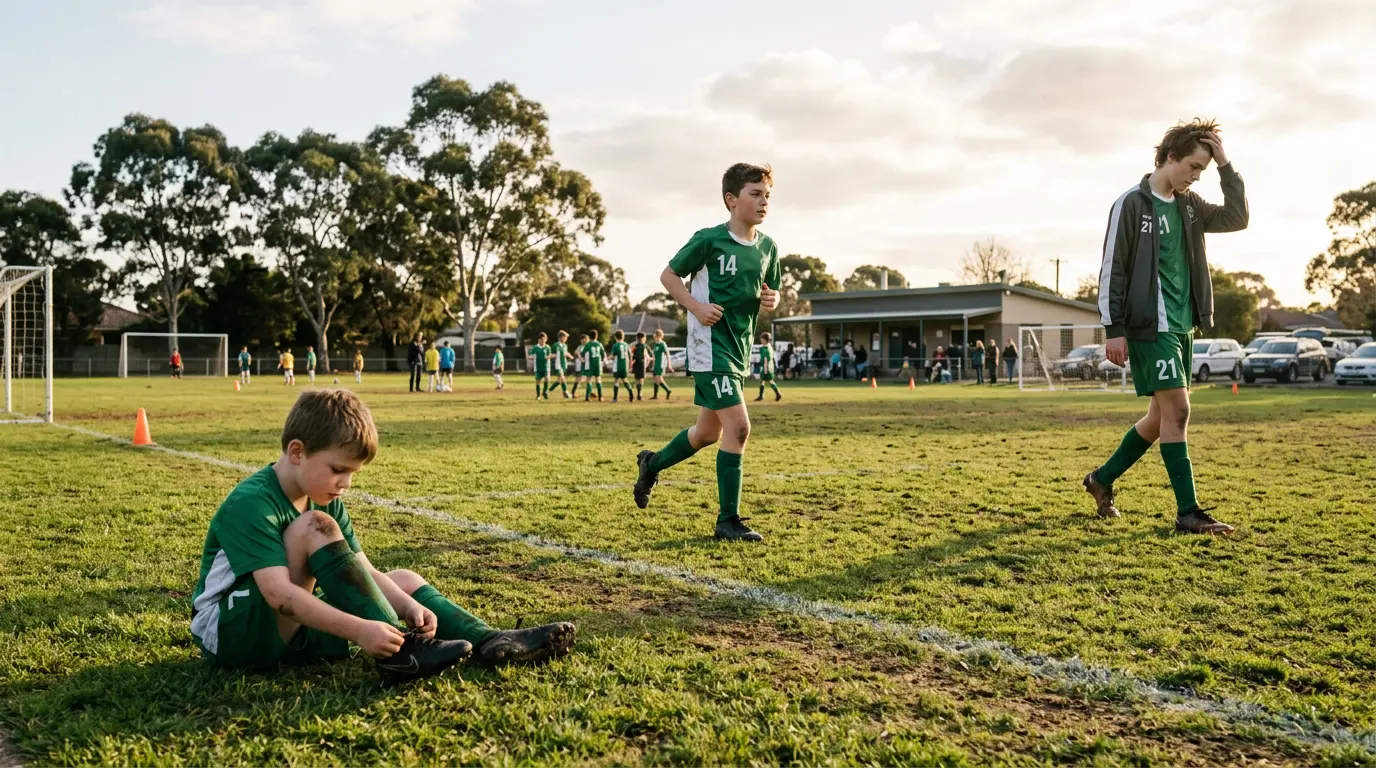
Emotional development from 5 to 16: what is normal at each stage
Three developmental phases (5 to 9, 10 to 13, 14 to 16) with different emotional registers. The prefrontal cortex (judgement, regulation) does not mature until the mid-twenties; the gap between emotional intensity and regulatory capacity is widest at 12 to 14. What is normal at each stage, what to do, what to skip, and the four-week threshold for asking the GP.
Read article →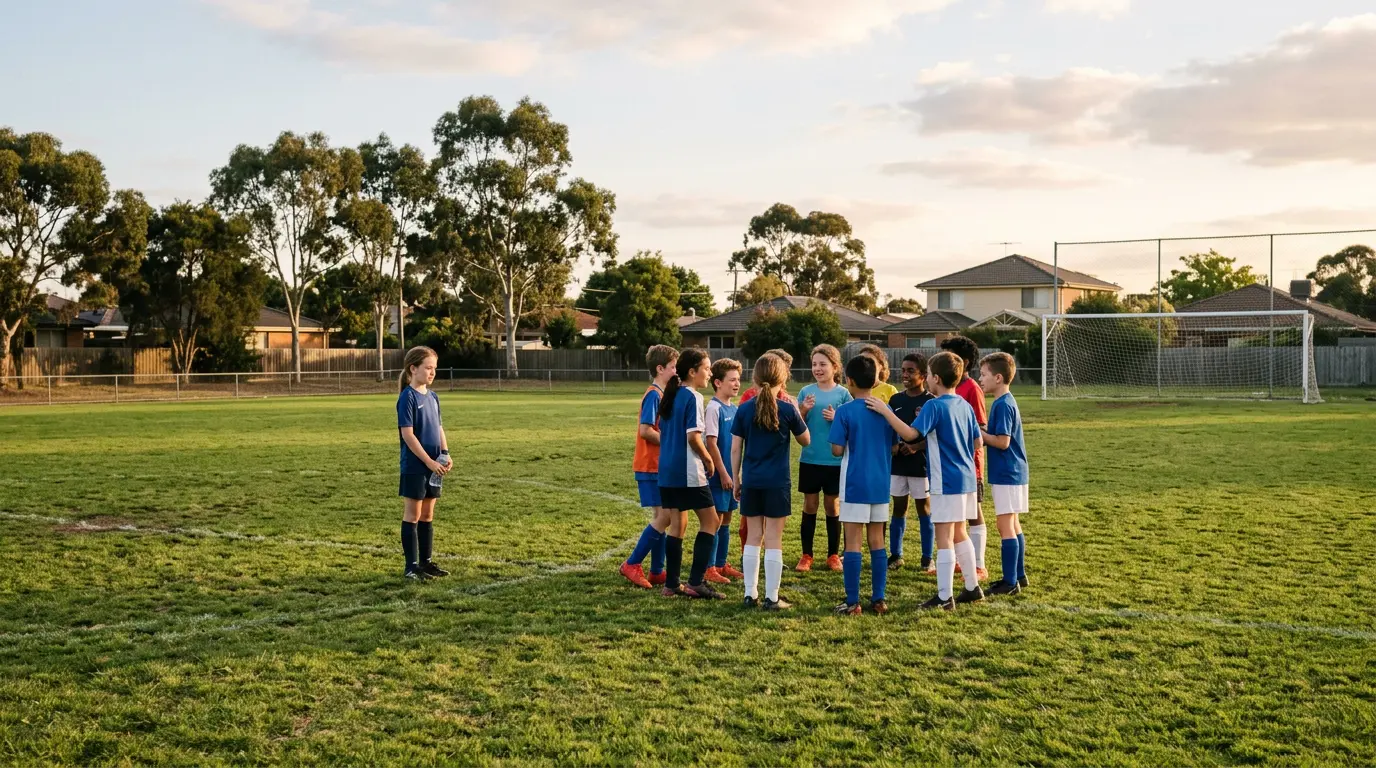
The introvert at football: how to support without forcing
Your nine year old loves training. They go quiet on Saturday. The mistake parents and coaches make is reading reservation as a deficit and reaching for tools that worsen it. NIH 2025 research confirms introversion is stable from infancy through to age 26. About half of any junior team. What works on game day, what to never do, and the reframe for parents who were the loud kid.
Read article →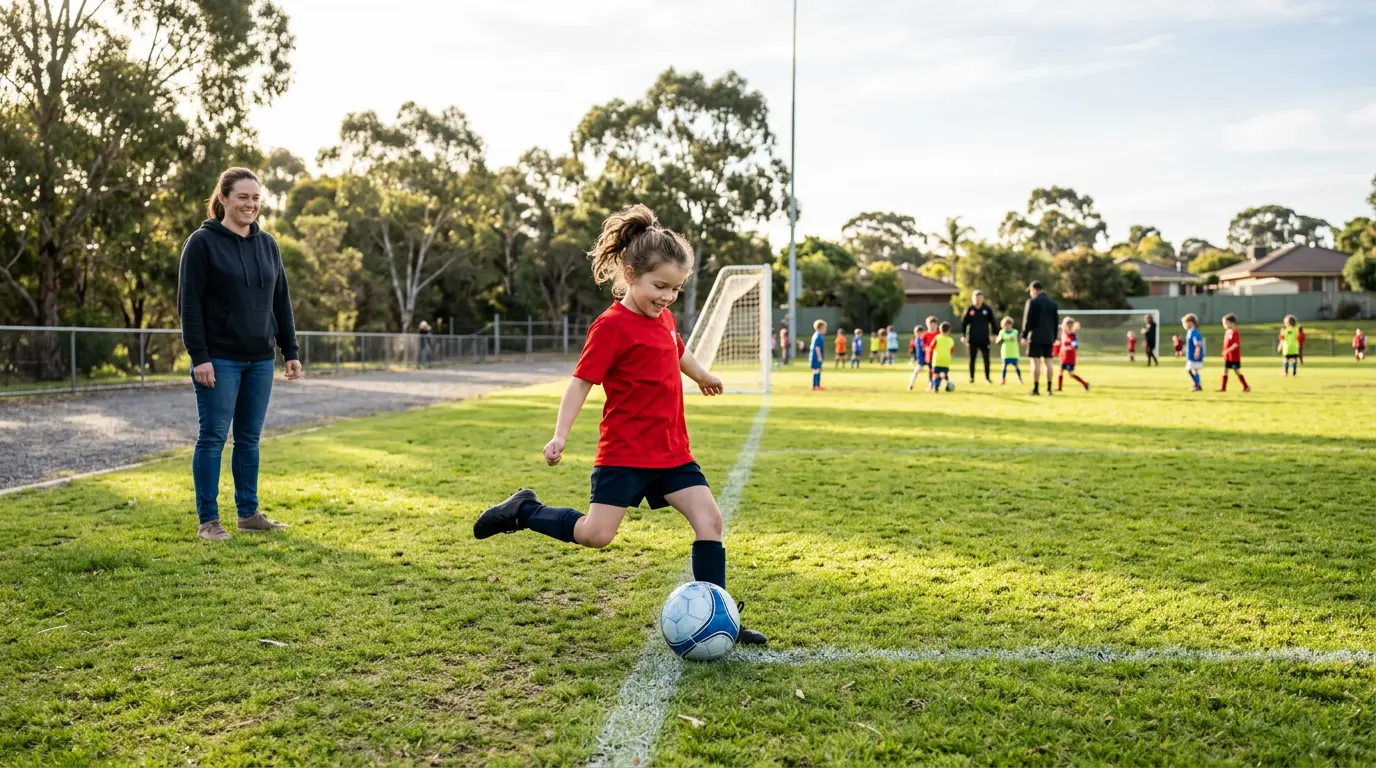
Your daughter wants to play football: the path to the right starting point
Your eight year old daughter has decided she wants to play. You sit at the laptop with seventeen tabs open. The path from she wants to play to boots on Saturday morning is short. The actual prices, the questions to ask the club, what to skip in year one, and the part the websites do not tell you.
Read article →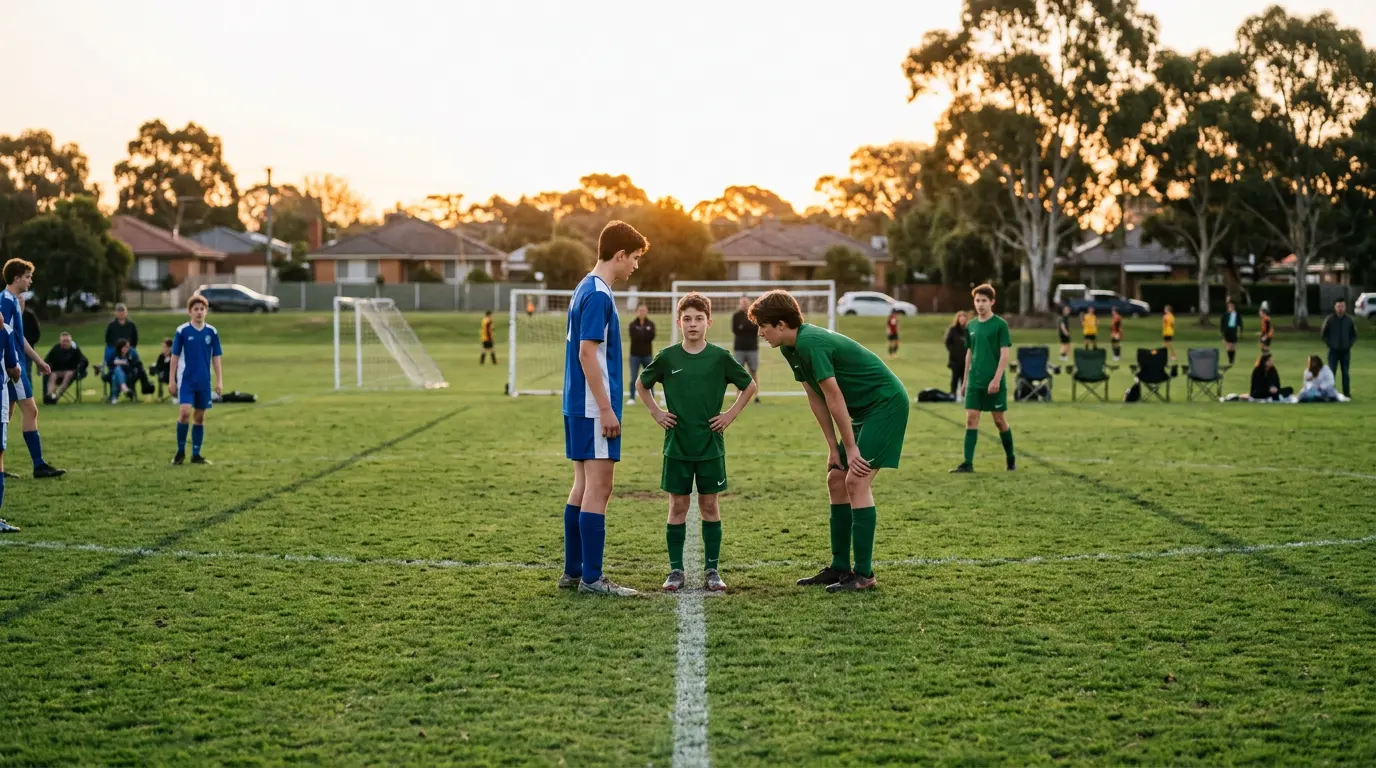
The late developer: why it might be the best thing that ever happened
Your 11 year old is half a head shorter than the kids being picked. The Relative Age Effect is real and well-documented in football: 5x more first-quarter kids in academies than fourth-quarter kids, with no difference in actual physical capacity. The bias inverts at senior level. The danger window is 13 to 14, when most kids drop out. The single biggest predictor of pathway success for a late developer is staying in the game.
Read article →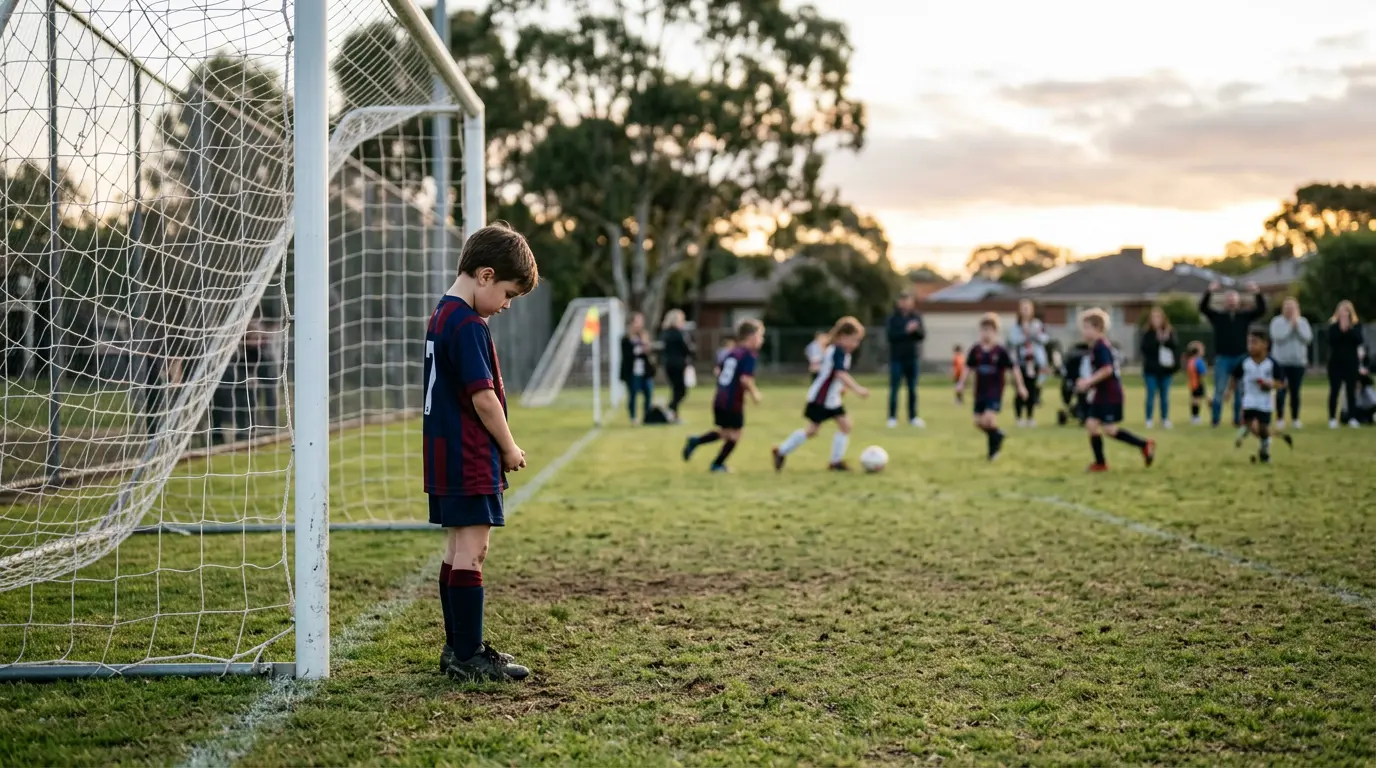
Your kid can't recover from a single mistake
Your nine year old gives the ball away in the first ten minutes and never recovers. They are physically present for the rest of the half but mentally checked out. What is happening, why it is age-typical to about 11, what works in the moment, and when to look for help beyond the sideline.
Read article →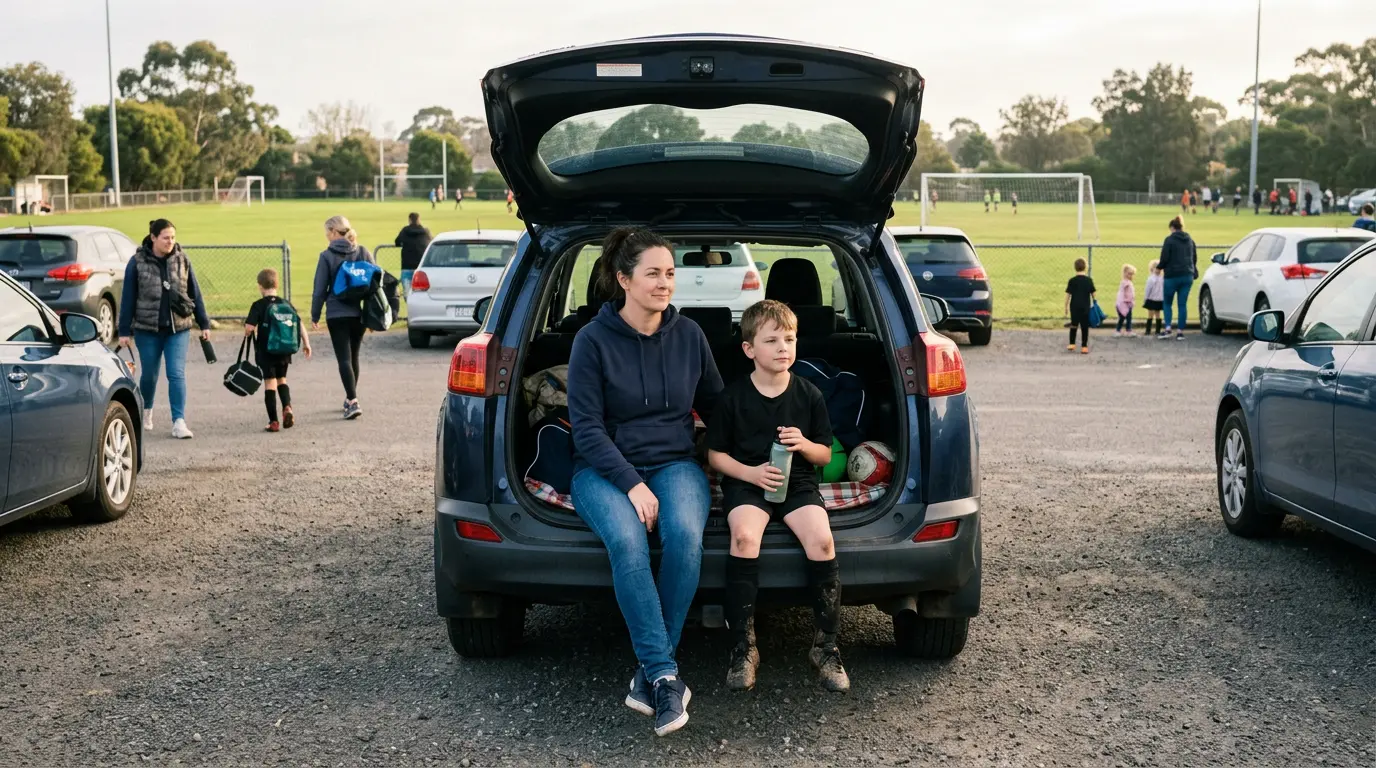
A pre-performance routine for a nervous kid
Your kid is quiet in the back seat 20 minutes before kick-off. They say they don't want to play. A five-step routine that takes 15 to 20 minutes from car park to kick-off and works because it gives the nervous system something to do other than escalate.
Read article →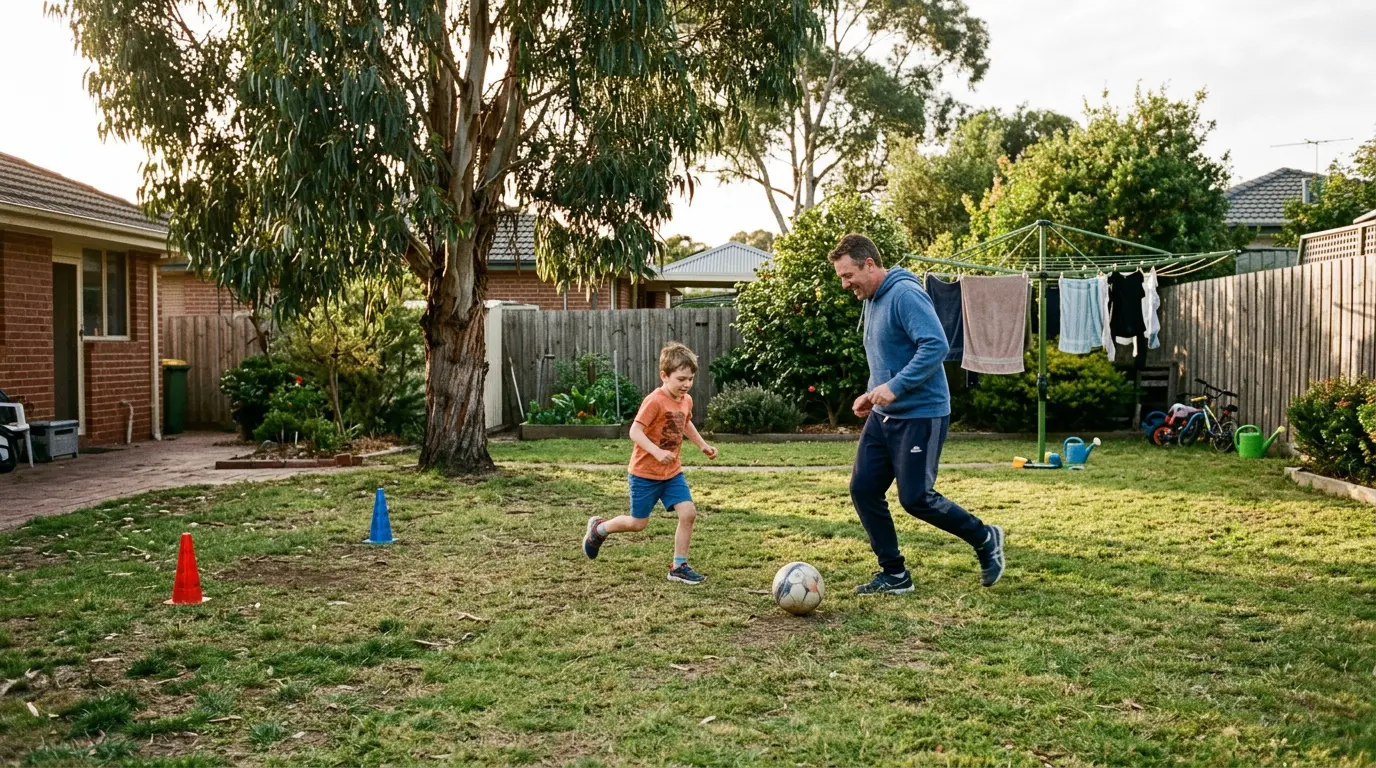
The backyard isn't a drills session. It's an environment you set up.
The backyard is not a drills session. It is an environment you set up so that when you are cooking dinner the kid is outside running their own thing with the ball. Why that scene matters more than any drill, and how to make it actually happen.
Read article →
Return-to-learn after concussion: the school conversation to have.
Return-to-learn matters as much as return-to-play after concussion. Most parents focus on the football clearance and let school slide back to normal too fast. The brain reacts to homework and classroom noise the same way it reacts to running. Here is the conversation to have with the school in week one and the four-step framework that protects your kid for the next month.
Read article →
Return-to-play after concussion: the protocol that keeps your kid safe.
Return-to-play after a junior football concussion follows a strict six-step framework. Football Australia tightened the protocol in April 2025. Each step needs 24 hours symptom-free before the next. Minimum 11 days from injury to contact training for under-19s. There is no shortcut, and the GP, not the coach, signs off the contact step.
Read article →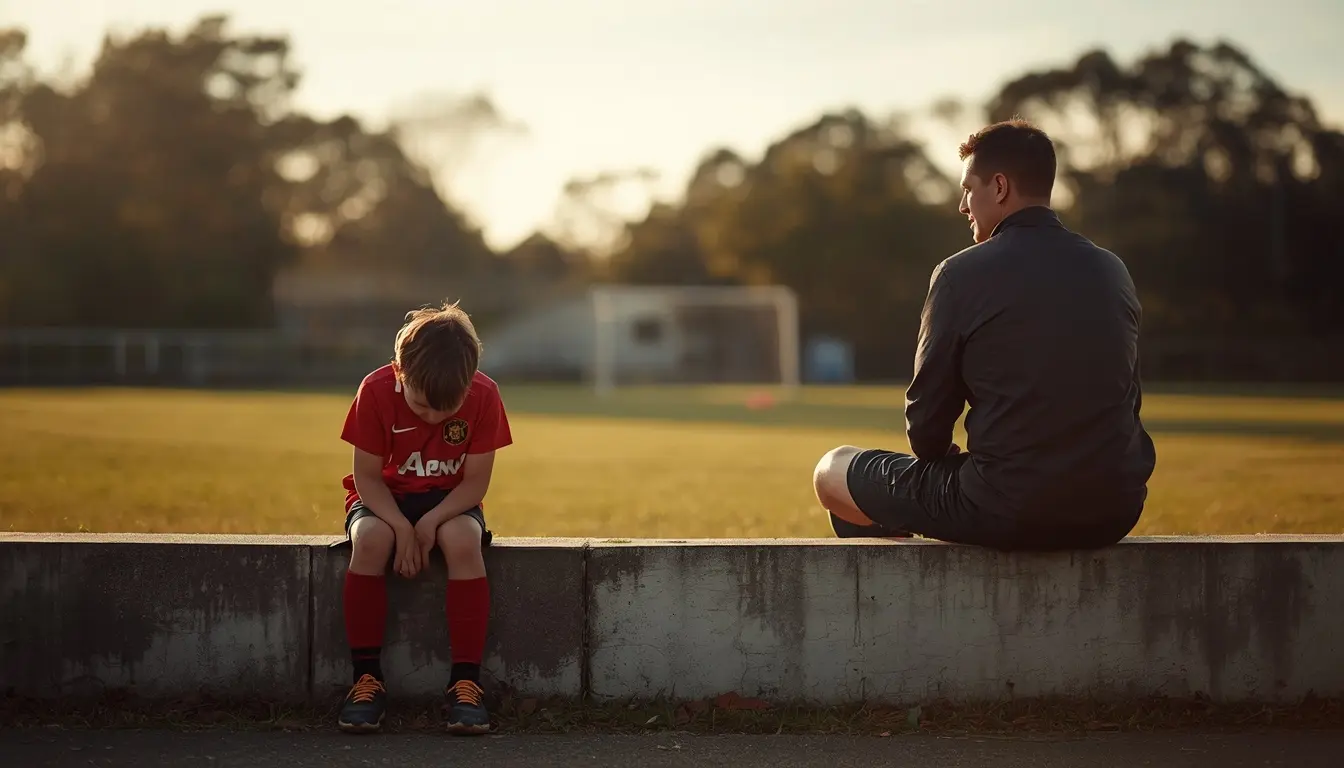
Your kid loses it after mistakes. Here's what to try, in order.
Your eight-year-old misses an open goal and breaks down. Your eleven-year-old slams their boot into the post after letting one in. This is normal developmental territory. There is a sequence that helps in the moment without making it worse, and a list of things not to say. The instinct to fix it is the trap.
Read article →
Concussion in the first week: the rules that protect your kid.
What the first week after a junior football concussion looks like. The 21-day standdown, the 14-day symptom-free count inside it, gradual reintroduction days 3 to 7, school in pieces before sport, and the second GP visit that signs off on starting return to play.
Read article →
Concussion in the first 24 hours: exactly what to do, step by step.
The kid took a head knock, you pulled them off, and now it's Saturday evening at home. The medical guidance changed in the last few years and the old advice (wake them every two hours, dark room, complete rest) is mostly wrong. What to actually do across the first 24 hours.
Read article →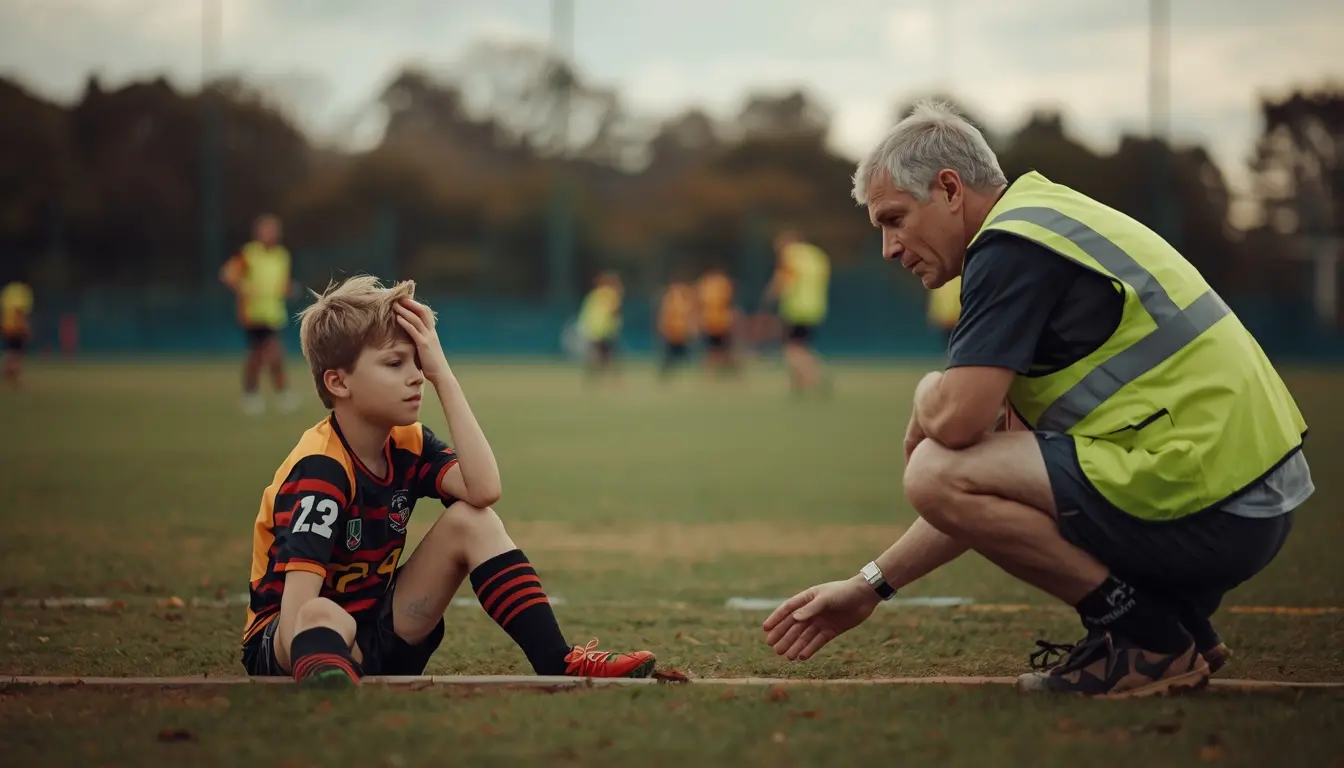
Concussion signs in the first five minutes: the ones that get missed
The TV picture of concussion is a knockout. The reality at junior football is subtler. The signs that show up in the first five minutes, the four-word rule that resolves every borderline call, and what to do when you're not sure.
Read article →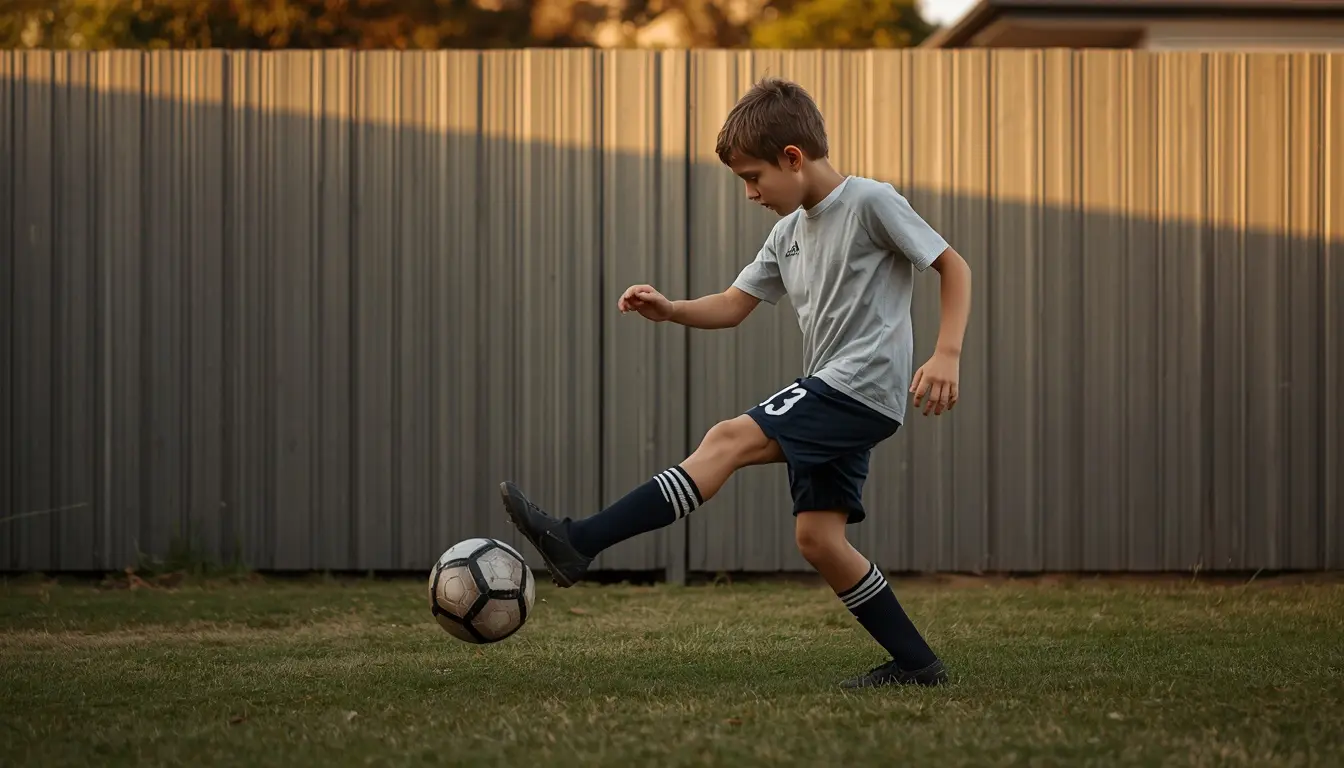
Starting football at 8, 9, or 10. Is it too late?
Your kid is 9, has never played football, and just asked if they can. It's 11pm and you're on Google wondering if you've left it too late. Short answer: no. Long answer is in here.
Read article →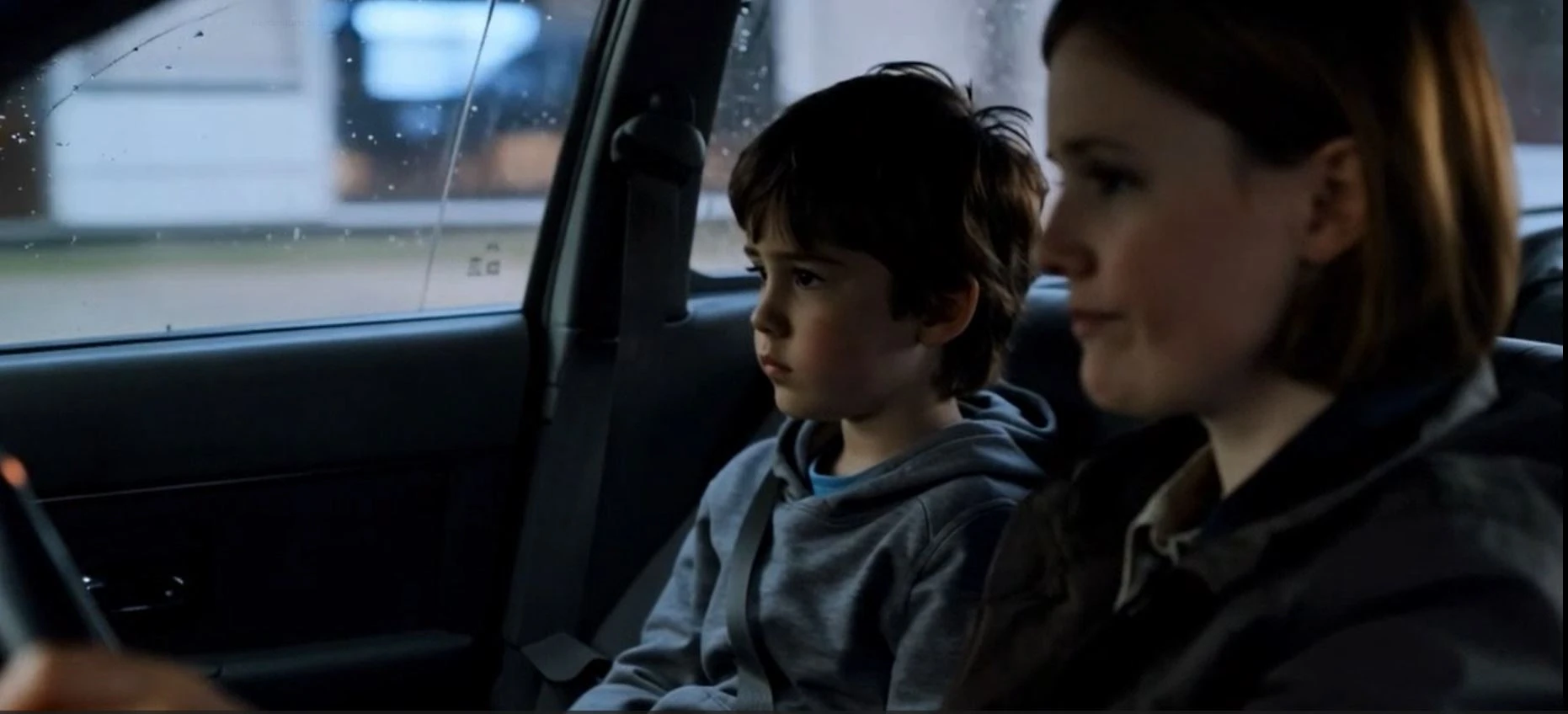
The car ride home, and the one line that changes everything
The first thing you say in the car after a junior football game shapes how your kid feels about the whole season. The line that consistently works. What to do with silence. And the three things most parents reach for without thinking.
Read article →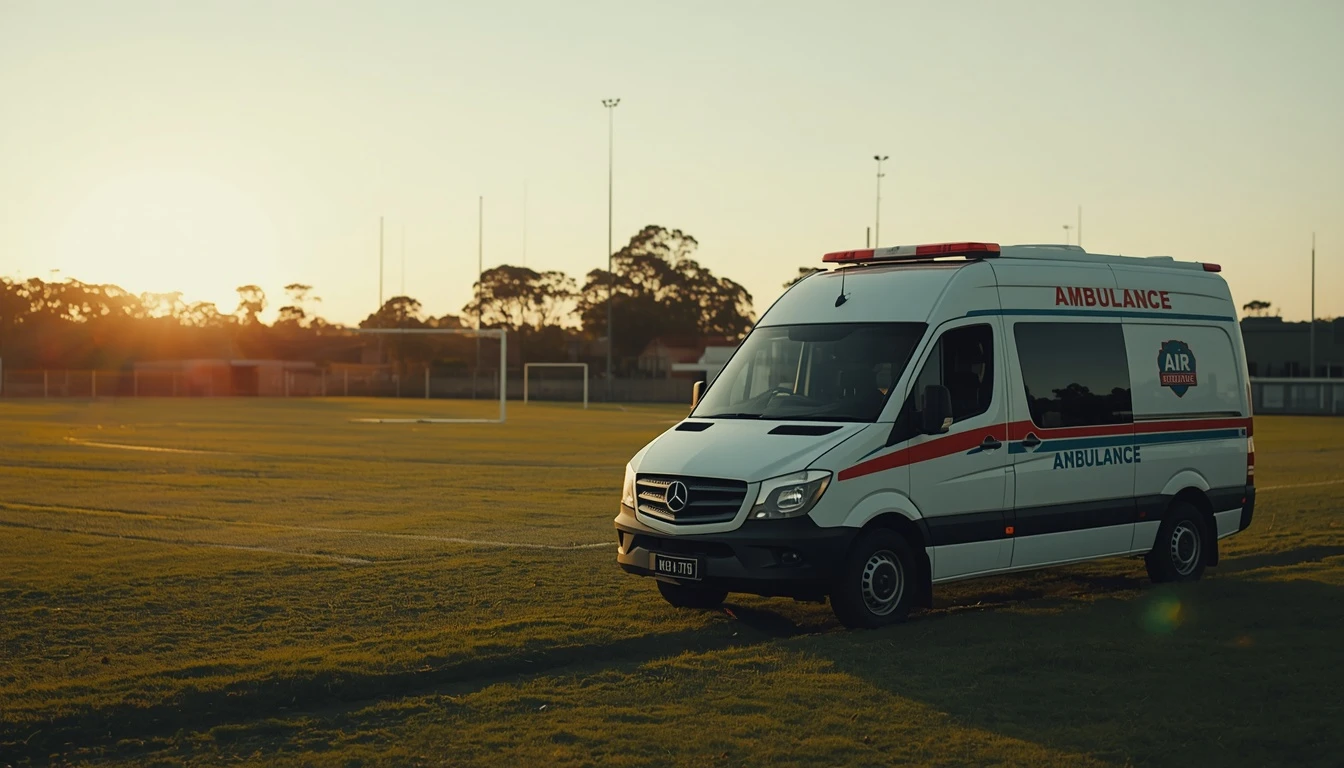
Ambulance cover and junior football in Australia
Most parents assume Medicare covers ambulance. It does not. Your child's football registration does not either. Here is the state-by-state cost breakdown and the three real options for getting cover.
Read article →Want the rest of the library?
These 46 articles are free forever, no signup needed. Membership unlocks the rest, plus audio, the AI, comments, cheat sheets, and a new article every day. $4.95/month, cancel anytime.