Is your athletic daughter eating enough? The signs worth paying attention to.
You noticed it on the drive home from training. Her shorts looked loose. She mentioned, almost in passing, that her shin has been niggling for three weeks. And then there was the thing you weren't sure whether to mention: her period has not come for a while.
So you opened your phone and typed it in: "athletic daughter eating enough, signs to watch."
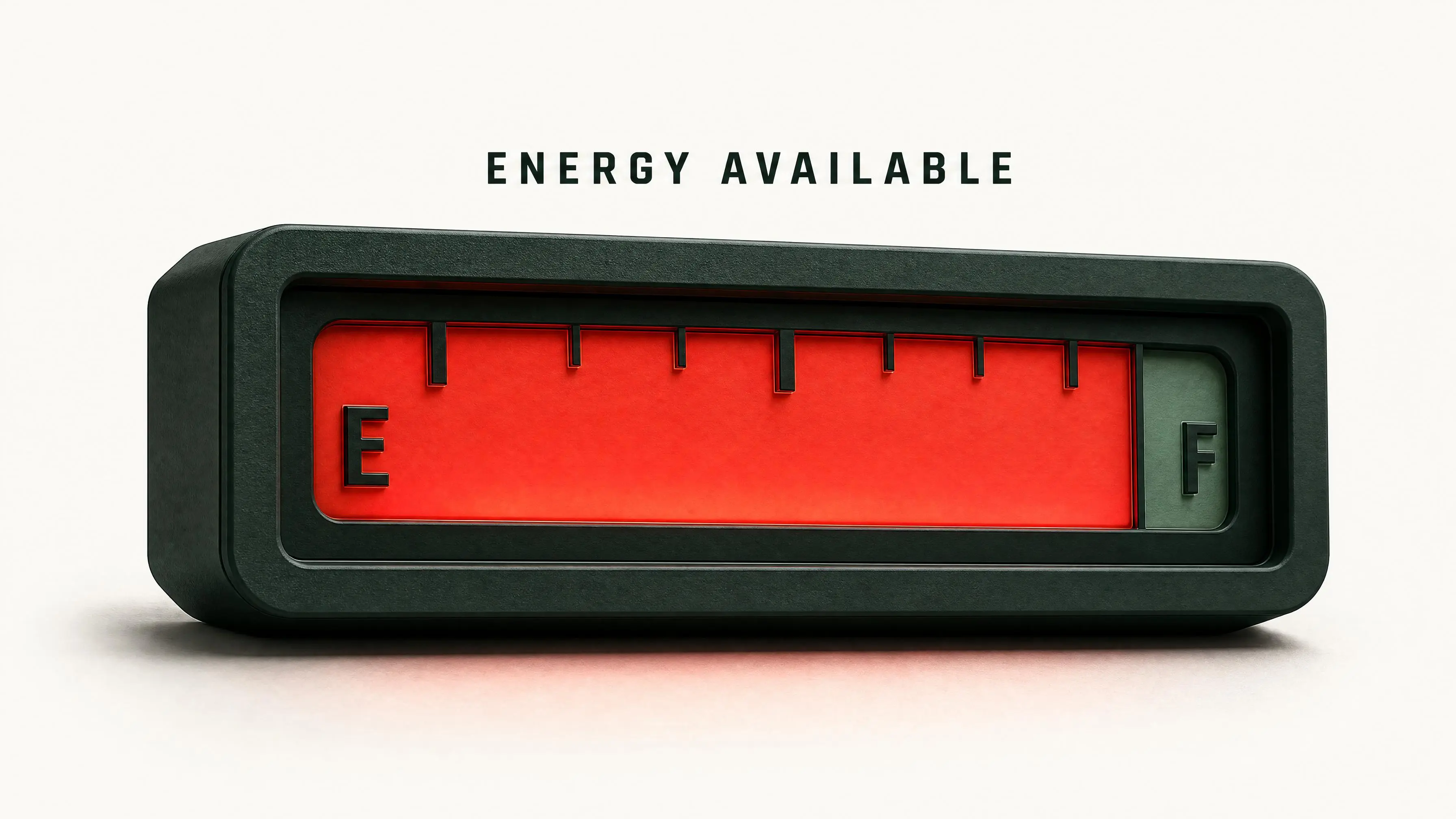
The honest answer is that the question itself is wrong. The question is not whether she eats enough. The question is whether any fuel is left in her body once training, growing, and running her brain have all taken their cut. A girl can eat a full plate at dinner and still be underfueled because she burned more than she ate. The technical name for that gap is Low Energy Availability, and four signs tell you it has gone too far: her period changes, recurring injuries that will not heal, sleep and mood that drop together, and performance falls off with no obvious cause. Weight loss is also a sign. It is the last sign, not the first.
If she has gone more than 45 days between periods, or she has a stress injury that has come back more than once, those are doctor conversations and not USI ones. The rest of this article tells you what to watch for, and how to know when you have crossed that line.
Why "is she eating enough" is the wrong question
Sports science has a name for what we are actually measuring. It is called Energy Availability. The maths is simple: take the food she eats in a day, subtract the energy she burned in training, divide by her muscle mass. What is left is the fuel her body has for everything else: building bone, making hormones, growing taller, running her brain at school, fighting off colds.
When that leftover fuel drops below about 30 calories per kilogram of muscle per day, her body starts switching things off to save energy. Periods stop. Bones get weaker. Sleep gets worse. Hormones go quiet. That number has been the research benchmark for the "clinical low" since the early 2000s. The newest 2025 guidelines move beyond a single fixed number, because real bodies vary, but 30 remains the figure parents will hear from most sports doctors.
Here is the trap. A teenage girl can sit down to a normal dinner, eat what looks like a normal amount, and still be in deep deficit if she trained twice that day or played a tournament. The food on her plate looks fine to you. The fuel left in her tank is not. This is why the question parents reach for, "is she eating enough," leads many of them in the wrong direction. They pile on more food. The problem stays hidden because the training load is the part nobody adjusted.
So the right question is not "is she eating enough at meals." It is "given how much she is training and growing, is there any fuel left?"
That reframe changes which signs you look at.
Sign 1: Her period is late, light, or has not started
This is the single most reliable early warning, and the one most parents do not want to discuss.
When a teenage girl is in energy deficit for long enough, her body stops making the hormones that drive ovulation. Her periods get late. They get light. They stop. Or, in the case of a girl whose periods have not yet started, they do not arrive on time.
Three patterns to watch for, plainly.
The gap between periods stretches beyond 45 days. A specialist sports medicine paediatrician in the United States, Dr Naomi Brown, names that number as the practical flag clinicians use: more than 45 days between periods in a teenage athlete is worth a doctor's appointment, not a wait-and-see. Two or three months between periods is not "she is just irregular." It is information.
Her periods stop entirely after they had started. This is called secondary amenorrhea. It is not normal in an athletic teenager, even one who trains hard. The body should resume cycles within a few months at most if energy is sufficient.
She turns 15 and her first period has still not arrived. This is called primary amenorrhea. There are non-energy reasons it can happen, but among girls training at football level, low energy availability is one of the first things sports doctors look for.
You may have already read the USI article on the logistics of your daughter's period in football. That article is the practical side: pads in the kit bag, dark shorts, what to do at training. This one is the medical side. The two work together. If the pattern above describes your daughter, the football logistics matter less than the GP visit.
Sign 2: Recurring injuries that will not heal, especially shin, foot, hip
This is the second early sign, and the one most parents misread as bad luck.
Bones do not just sit there. They are constantly being broken down and rebuilt. The hormones that drive that rebuilding are the same ones a girl loses when she is underfueled. So when energy availability drops, bone density drops with it. The result: shin splints that will not settle. A foot that hurts after every game. A stress fracture you thought was a one-off.
The numbers here are blunt. The most widely cited figure across all ages is two to four times higher stress fracture risk for athletes without regular periods. The most recent paediatric study, on 390 teenage athletes, found the risk much higher again: a teenage athlete whose periods have stopped is around twelve times more likely to suffer a stress fracture than a peer with regular periods. Different studies give different numbers. They all point the same way.
The pattern to watch for is not a single injury. It is the repeat. One stress fracture is bad luck. A second one in twelve months in a different bone is a flag. Shin pain that comes back every time training ramps up is a flag. A foot that aches after every game for three months is a flag.
The bones most often involved in adolescent female athletes are the tibia (shin), the metatarsals (foot), the femur (thigh), and the lower back. If you find yourself driving her to a third physio appointment for the same body part in a season, the question is no longer "what is wrong with her bone." The question is "what is wrong with the fuel that is supposed to be building it."
Sign 3: Sleep and mood drop
This one slides past most parents because it looks like ordinary teenage stuff.
When a body is in energy deficit, the hormonal systems that regulate sleep get thrown out. Falling asleep takes longer. Sleep is lighter. She wakes up tired even after eight hours in bed. Mood follows the same path: flatter, more irritable, more withdrawn. The technical reason is reduced thyroid hormone and disrupted cortisol patterns. The practical signal is a daughter who is sleeping badly and whose mood has changed for the worse over the same few months.
The trap here is that every teenager has bad sleep weeks and bad mood weeks. What matters is whether sleep and mood have changed in the same window as one of the other signs. Sleep and mood on their own can mean many things. Sleep, mood, and missed periods together mean something specific.
If she also has anxiety that is new, or low mood that is new, those are worth raising with a GP whether or not they are energy-related, because that conversation is its own thing.
Sign 4: Performance drops with no obvious reason
This sign is the one her coach may notice before you do.
When a girl is underfueled for long enough, her training stops working. Sessions she used to handle now leave her flat. Her sprints get slower. Her recovery between intervals stretches out. She tires faster in games. Strength does not build. Sometimes the coach calls it overtraining and prescribes more rest. Rest does not fix it, because the problem is fuel, not training load.
The marker to watch for is a steady drop across weeks, not a bad day or a bad week. Every player has a bad session. Every player has a flat fortnight after exams or a virus. What is not normal is a slow steady decline in what she can do at training over two or three months while training load has stayed the same.
If her coach mentions she is "not herself" or "looks tired all the time" and you can also tick one of the other three signs above, treat it as a pattern.
The sign that comes too late: weight loss
Most parents wait for weight loss before they worry. By the time you can see it, the problem has been running for months.
The body defends weight under low energy availability. It slows down metabolism. It cuts hormone production. It drops bone density and muscle quality first. Weight on the scales is one of the last things to move, because the body is doing everything it can to hold weight while it shuts down the systems that produce hormones, repair bones, and run periods.
This is why the previous four signs matter so much. Period changes show up in months. Stress injuries show up in months. Sleep and performance show up in months. Visible weight loss can take a year or more, and by then the damage to her bones may be partly permanent.
There is a hard biological reason for this. Maximum bone building happens before age 18. A girl who spends two years of her adolescence in deep energy deficit may not rebuild that bone fully, even if her periods return and her diet improves later. The window does not stay open.
When to stop reading USI and call the doctor, and what to ask for
If your daughter shows any one of these patterns, this stops being a USI conversation:
- More than 45 days between periods, or no first period by age 15.
- A second stress injury in twelve months, or a recurring pain that will not settle.
- Sleep and mood changes that have arrived alongside a period change.
- A steady drop in performance over months with no other obvious cause.
The right next step is a GP appointment. But there is a catch worth knowing: international research suggests that between 23 and 80 percent of female athletes show signs of low energy availability at some point, yet most family GPs do not screen for it as standard practice. Many GPs will treat the period issue or the stress injury in isolation without spotting the pattern that links them.
So when you book the appointment, ask for two specific things. Ask for a referral to a Sports and Exercise Medicine physician (the specialist who handles athletic injuries and the systems behind them). And ask for a referral to an Accredited Practising Dietitian with experience in adolescent athletes. The two together is the right team. The GP on their own may not be enough.
Tell the doctor what you have noticed. The pattern is what matters: period changes plus injury, or injury plus performance drop, or any combination. Doctors who do not see athletes regularly may not put the pieces together unless you put them on the table.
The Australian Institute of Sport runs a free education program for parents and athletes covering exactly this territory. It is called the Female Performance and Health Initiative (search those words on the AIS website), and the modules on Low Energy Availability and Bone Health are the ones to start with. Watching them takes about an hour and gives you the language to use with your doctor.
What to do this week
Write down what you have noticed: which signs, when they started, how long they have been going. Take that list to the GP and ask for the two referrals above. While you wait for the appointment, do not change her training and do not put her on any diet. The fix is fuel, but the dose of fuel needs to come from a dietitian who knows adolescent athletes, not from a parent guessing. For the deeper background on the condition behind these signs, the next article in this section is RED-S in teenage girls, which covers the medical detail.
This is not a problem you fix on your own. It is a problem you spot, name, and hand to the right team. USI helps you spot the pattern. Your GP makes the call.