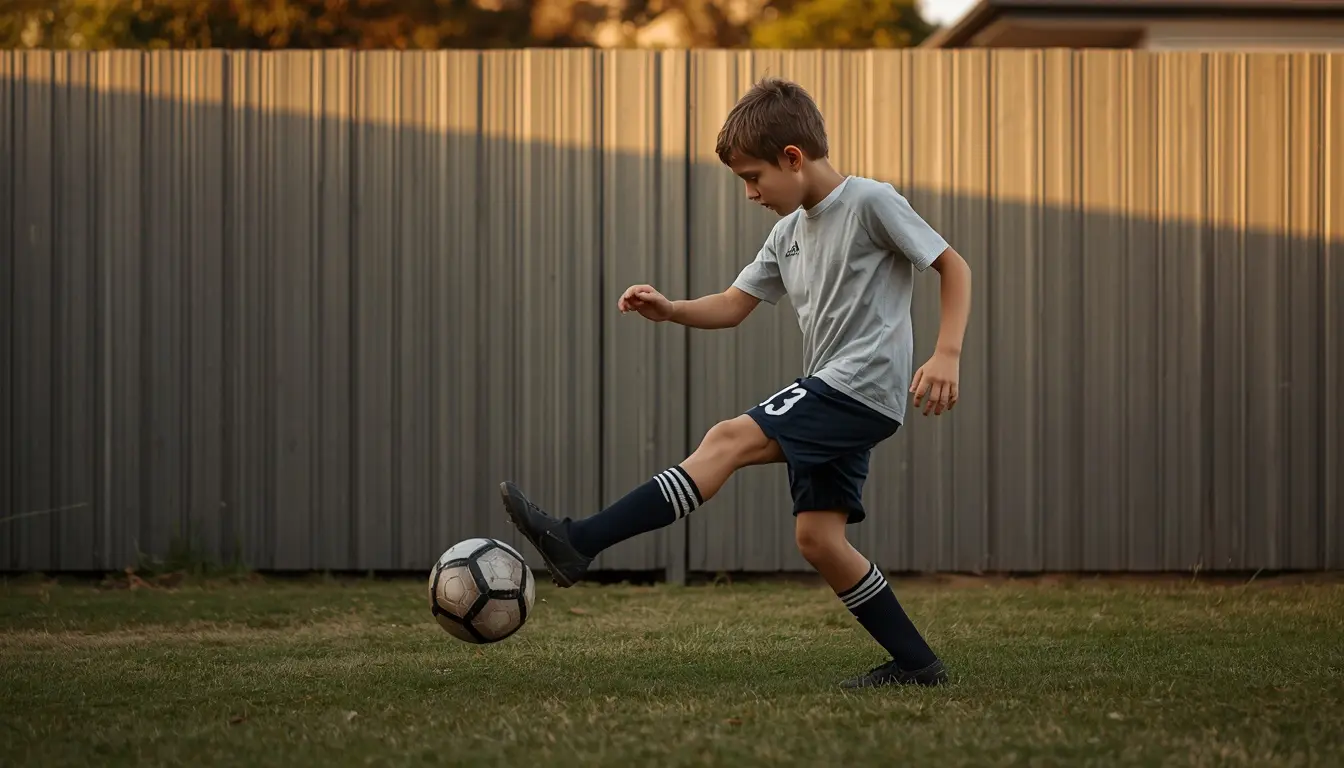
Your kid is 9. They've never played football. This week they came home from school and asked if they could play, because half their friends are in a team and they're not. You said yes, you'd look into it. Now it's 11pm and you're on Google.
Have we left it too late?
The short answer is no. The long answer is in this article.
What "starting late" actually means in Australian community football
Australian community football clubs run age groups from U6 to U18. Every season, in every age group, new starters walk in. The team that takes your 9-year-old next month will already include some kids who've played since they were 5, some who started last year, and some, like yours, who are walking in for the first time. That's normal. Clubs are built for it.
There is no minimum experience requirement. There is no skills test. There is no expectation that a kid joining at 9 has been playing for years. You register, you turn up, you train, you play. That's the whole entry process.
If a club ever made you feel your child was too late at 9, that club has a problem. Junior football has none.
What about the pathway?
This is the bit that gets in parents' heads. The Skill Acquisition Program. The JDL. The FQ Academy. The state-level Premier Leagues. The phrase "you have to start young to make it." Most of that is overstated.
Pathway program trials in Australia typically open at U11 to U13, depending on the state. So a child starting football at 9 has at least two years of regular play before any pathway selection event happens. That's plenty of time to be ready for a trial, if the trial is what they end up wanting.
Football Australia's own development framework targets formal talent identification from around U13 onwards. Anyone trying to identify "talent" before then is mostly identifying who is biggest and fastest right now, which has very little to do with who plays well at 17.
If your kid wants to chase the pathway side of football one day, starting at 9 doesn't close that door. It just means the first year or two is more about catching up on time with the ball than about getting picked for things. Which is exactly what a 9-year-old should be doing anyway.
The size and birth-month thing
A child born in January is up to 11 months older than a child born in December in the same age group. At U7 that's a huge gap. At U9 it's still big. By the late teens it has mostly evened out.
What this means for a late starter: a 9-year-old in their first year, if they're born early in the calendar year, is often physically the same size as the 9-year-olds who've been playing for three years. Size is doing more work in junior football than most parents realise. Time on the ball is what's missing, and that comes back faster than people think.
What a late starter catches up on, and what they don't
Most things, fast. Specific things, sometimes never.
Basic technical skill (kicking, controlling, passing, dribbling) catches up within one to two seasons of regular play. Time on the ball does the work, not formal coaching. A child who plays at training and then kicks the ball around the backyard for half an hour after school has more technical development per week than a child who only does training.
Tactical understanding (where to stand, what to do off the ball, how to read what's happening) is age-driven more than experience-driven. A 9-year-old in their first year is usually at a similar tactical level to a 9-year-old in their fourth year, because tactical awareness depends on brain development first. By 12 or 13, most of this has evened out.
Fitness, athleticism, attitude, work rate, all easy catch-ups.
What doesn't fully catch up, at elite level, is the very specific automatic feel for the ball that comes from years of unstructured play before age 8. This matters at the very top tier of professional football. For everyone else reading this article, including kids who go on to play in state-level competitions, it isn't relevant.
If your kid wants to play for fun, with their friends, well into their teens, then "what they don't catch up on" is a non-issue.
The thing nobody mentions about late starters
Late starters drop out less. Across Australian junior sport, kids who start a primary sport later have lower drop-out rates through the teen years than kids who started at 4 or 5.
The reason is simple. They didn't burn out at 7. They came to football with the freshness of choosing it, rather than the weight of having always done it. By 13 or 14, when most kids start making their own decisions about how they spend their Saturdays, late starters are still enthusiastic. Early starters often aren't.
That's not an argument for waiting. It's an argument for not panicking about late.
A short note on the famous late starters
Tim Cahill is famously the kid who took up football seriously around school age, after starting with rugby. Jamie Vardy didn't start serious football until 11. Antonio Di Natale, more than 100 caps for Italy, started at 12. Cuauhtémoc Blanco, World Cup goalscorer, started at 14.
These aren't proof your kid will be Tim Cahill. They're proof the door doesn't close at 8.
What to do this week
If your child has asked to start, here's the practical version.
Find a local club. Most are easy to find through PlayFootball search. Ask them about U9 (or whatever age group your child is) registration for the upcoming season.
Register them in the right age group. Don't register them a year down "to give them a chance to catch up." Football Australia age grouping is by calendar year for developmental reasons. Playing down works against your child socially. In most state competitions it's also a competition rule breach.
Commit to one full season before evaluating. The first three weeks will not be representative of anything except how shy or excited a 9-year-old is in a new place. Wait until end of season to assess.
Prioritise unstructured ball time at home over extra coaching. Backyard, footpath, park, school yard, anywhere with space and a ball. The kids who catch up fastest are the ones who play with the ball outside of training. No drills. No instruction. Just the ball, and the kid, and time.
Watch enjoyment, not skill, in the first season. Skill comes when enjoyment is there. The reverse never happens.
The biggest risk
It isn't your kid's age. It's your anxiety.
Kids pick up parental urgency about catching up before they pick up the ball. They feel the worry, and they read it as their problem to solve. The pressure that produces in a 9-year-old, on top of being a beginner in a team where some of the kids have played for years, is the thing most likely to make them not enjoy it. And not enjoying it is the only real way starting at 9 fails.
If you can stand on the sideline cheering effort, drive them home talking about whatever they want to talk about, and treat the first season as a year of finding out whether they like football, your kid is fine. They are not behind. They have not missed a window.
The short version
Australian community football welcomes new starters at every age from 6 to 18. The pathway window doesn't open until 11 to 13. Most things catch up within two seasons. Late starters drop out less than early starters. Don't register down. Commit to one full season. Watch their enjoyment, not their skill. Manage your own anxiety. The window is wide open at 9.
If you want a deeper read on child development and starting sport later, Raising Children Network has good general guidance.
For the other side of this question, what age is too early to start, see How early is too early?.