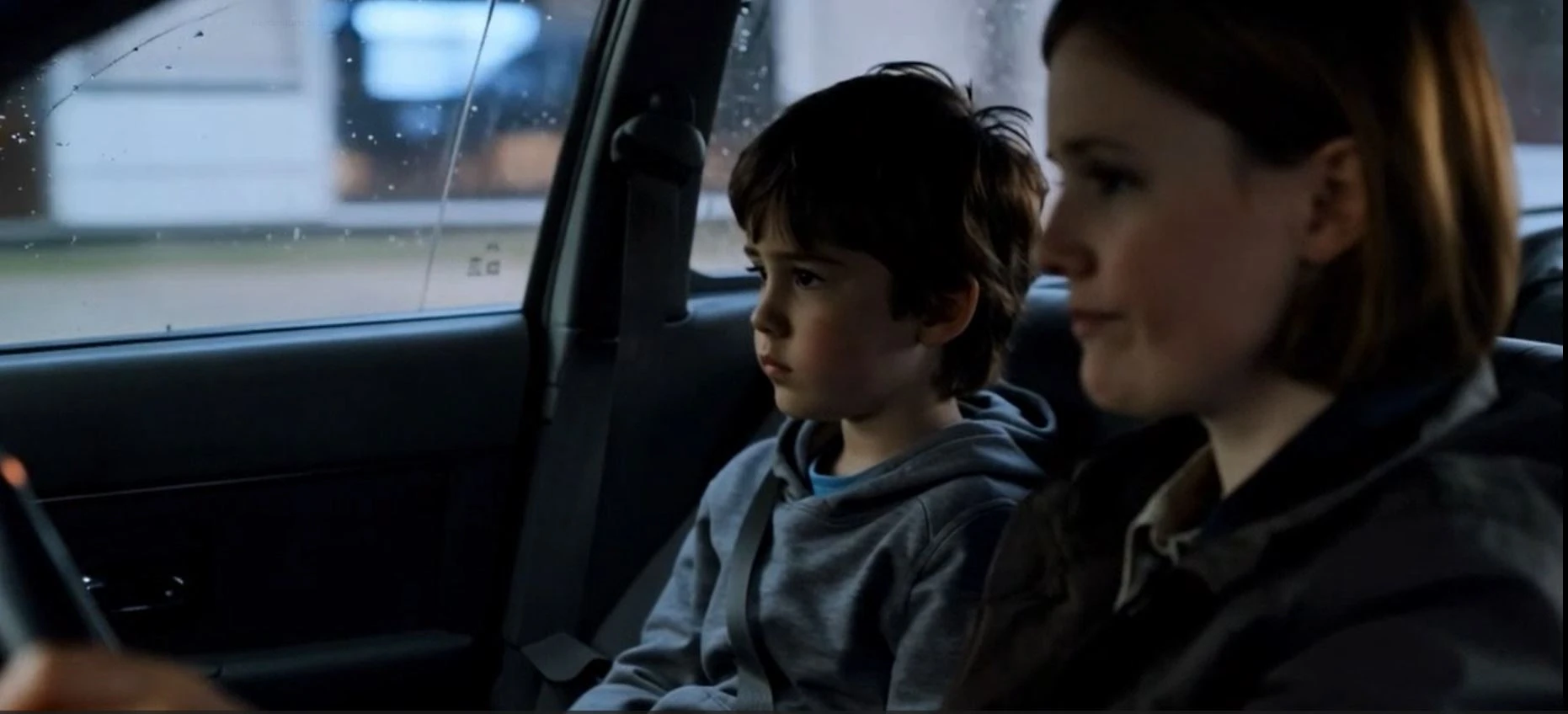
The final whistle goes. You wave. Your kid sees you and starts walking toward you, boots flapping, head down, water bottle in hand. Maybe she scored, maybe she didn't. Maybe they won, maybe they lost. Maybe she had the best game of the season or the worst.
In about ninety seconds you're going to be in the car together with the doors closed, no one else listening. What you say in the next ten minutes matters more than almost any other ten minutes of her week as a footballer.
This is the bit nobody tells you when you sign your kid up for football.
What most of us do without thinking
The car door closes. Most of us go straight to one of three things.
The result. "Did you win?"
The technical critique. "You should have passed there."
The comparison. "Did you see what number 9 was doing?"
It isn't bad parenting. It's instinct. We watched the game, we have things to say, we want them to do well, and pointing out what went wrong feels like helping.
Here's the problem. Kids that age don't separate "what mum thinks of how I played" from "what mum thinks of me." For ten or fifteen minutes after the whistle, those are the same question. So the first thing you say lands harder than you think it does, and it lands as a verdict.
If the first thing out of your mouth is the result, they hear: winning matters most. If it's the technical critique, they hear: I noticed what you got wrong. If it's the comparison, they hear: you didn't measure up.
You didn't mean any of those. They heard them anyway.
The line that consistently works
When former athletes are asked what their parents said after games that helped them most, the same answer keeps coming up. Some version of:
I love watching you play.
That's it. Not "you played great today." Not "I'm proud of you." Just that. It works for two reasons.
First, it doesn't depend on the result. You can say it after a 9-0 loss with the same honesty as a 9-0 win.
Second, it points at the right thing. You love watching them play. Not them winning, not them scoring, not them executing the move from training. Them, playing.
Try it. Watch what it does to your kid's shoulders the next time you say it. They might not even respond. That's fine. They heard it.
What to do with the rest of the drive
After that line, the rule is simple. Let them lead.
If they want to talk, they'll talk. If they want to sit with their headphones in, let them. If they want to ask why the referee didn't blow up for the foul in the second half, answer briefly and stop.
A useful guideline doing the rounds in Australian community coaching is the 30-minute rule. Don't bring up what they could have done differently in the first 30 minutes after the whistle. Adrenaline is still up. The disappointment is still raw. You're talking to a kid who hasn't fully processed the game, and your "you should've passed there" lands twice as hard as you meant it.
If there's something worth saying, say it tomorrow. Or at training mid-week. Or never. Most of the things you'd say in the car after a game don't actually need saying.
On the silent drive home
Sometimes you'll get in the car and your kid won't say a word. Won't answer questions. Won't look at you.
The instinct is to fill the silence. Don't.
A child who's processing a hard game is doing real work in their head. They aren't ignoring you. They aren't being rude. They're letting their adrenaline come down and putting the game in some kind of order. Your silence beside them is the most supportive thing in the room. The presence is the message.
You don't have to fix it. You don't have to talk them through it. Just drive. Hand them their water. Put music on if you usually have music on. Be there.
Most of the time, twenty minutes in, they'll start talking. Sometimes they won't. Both are fine. There's a longer piece coming on the silent drive home, but for now: don't fill it.
What gets in the way
Three things make the car ride harder than it should be.
Body language before words. A heavy sigh. A slammed boot-bag. A tight jaw. A flat "yeah" when you greet them. Your kid is reading you before you've said anything. By the time you say "I love watching you play," the message has already been sent, and whatever you say next is interpreted through it.
If you were frustrated on the sideline, take a minute before they get to you. Walk to the car. Reset your face. Don't carry sideline frustration into the car.
Other parents in the car. A grandparent, a teammate, a sibling who didn't play. Whoever else is in the car will have things to say too. Say "I love watching you play" first, before anyone else gets in. Your line, your moment, before it gets crowded.
The post-mortem you wanted to have. You watched the whole game. You have observations. You're a parent of a footballer and you care. Sit on it. The post-mortem isn't the gift you think it is. The gift is "I love watching you play," and then driving.
The longer view
The car ride home isn't one moment. It's forty Saturdays a year, multiplied by however many years they play. One drive doesn't break it. Forty drives in a row where the first thing you say is the result, the critique, or the comparison, does.
Same with the good version. The kids who keep playing into their teens, who play for fun rather than to please, who don't burn out at 13, almost all share one thing. The car ride home wasn't where they were judged.
Cheer effort on the sideline. Stay quiet while they play. And in the car, on the way home: I love watching you play.
That's it. The rest is detail.