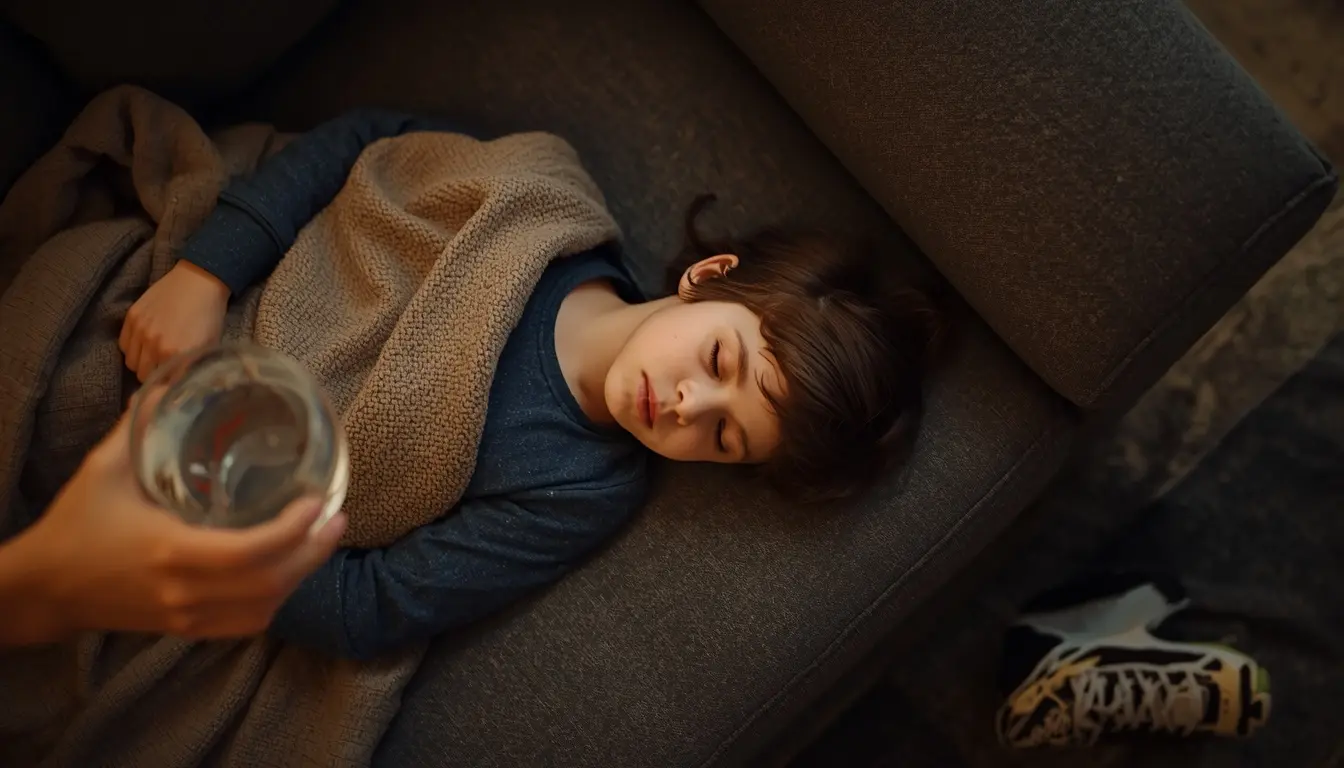
It's 5pm on a Saturday. You're in the kitchen, your kid is on the couch, and you've just driven home from the field where they took a head knock at U10s. You did the right thing and pulled them off. You didn't let them go back on. Now you've got the rest of the day and the night in front of you, and you don't quite know what you're doing
You half-remember some advice from when you were a kid yourself. Wake them up every two hours through the night. Dark room. No food. No screens, possibly forever. Most of that advice is now wrong. The medical guidance changed in the last few years and most parents are still working off the old version.
If you haven't read the recognition piece, read that first. This article assumes you've already pulled the kid off and now you're at home, working out what to do across the first 24 hours. USI is written by parents for parents, not by medical professionals. Everything below is the parent-to-parent translation of the Royal Children's Hospital Melbourne, the AIS, and the Football Australia guidance linked in this article. For diagnosis, treatment, and clearance to play, the call is your GP's, not ours.
The principle that runs through everything
The current Australian medical guidance is "relative rest, not strict rest" for the first 24 to 48 hours. The Royal Children's Hospital Melbourne puts it directly: relative rest, with sufficient sleep, limited screen time, and continued normal daily activities like reading and walking. The kid is not on bed rest. They're not in a dark room. They're at home, doing quiet things, with the volume of life turned down for a day or two.
The reason this matters: the old "complete rest" advice slowed recovery for a lot of kids. Current evidence is that some light cognitive and physical activity, kept brief and stopped if symptoms worsen, helps the brain recover faster. The phrase to hold onto is brief, mild worsening of symptoms is acceptable during light activity, as long as the symptoms come back to baseline before the next activity.
That's the principle. Below is the hour-by-hour version.
The first hour at home
Three things to do as soon as you walk in the door.
Book the GP. If it's during the week, ring for an appointment for the next morning. If it's the weekend, book for Monday morning, or if you're worried about anything, an after-hours GP service or the local hospital ED is the path. Do not wait. The GP visit confirms the diagnosis, gives you written documentation for the football personal accident claim, and starts the official standdown clock.
Write down what you saw. While it's fresh. Time of the knock. What happened (header, head-to-head, fall, hit by ball). Whether they lost consciousness, even for a second. What they said and how they looked in the first five minutes after. The GP will ask. Phone notes are fine.
Sit them somewhere quiet. Not the dark room. The couch with the TV off. They can lie down if they want to. Get them a glass of water. Take their boots off. Make the environment calm without making it strange.
What to do if your kid is in pain
The Royal Children's Hospital paediatric guidance is clear on headache after head injury: paracetamol every six hours if needed for pain, following the dose for your child's age and weight as printed on the bottle.
Two important rules around painkillers in this window.
Never give aspirin to a child. Not for a head injury, not for anything. Aspirin in children carries a risk of Reye syndrome, which is rare but serious. This is a universal rule, not specific to concussion.
Paracetamol is the recommended option for the first 24 hours. If you want to use ibuprofen instead, ask your GP first. Some clinicians prefer paracetamol-only after head injury and the call is theirs to make, not ours.
If paracetamol isn't touching the headache and your kid is uncomfortable beyond a normal level, that's one of the red flags later in this article. Don't keep stacking doses, ring an after-hours service.
The first evening
The general shape of the evening is quiet, normal-ish, no screens.
Reduce but don't eliminate screen time. The current guidance is to cut back, not cut out completely. Research has found that complete screen isolation doesn't improve recovery, but excessive screen time worsens symptoms. A practical rule: no gaming, no homework, no social media, no extended TV. Brief stretches of TV with the family if they want it, audio is fine, audiobooks and podcasts are good, music is good.
Normal-ish dinner. No special diet required. If they're hungry, feed them. If they're nauseous (a common concussion symptom), offer something plain like toast or rice. If they're vomiting more than once, that's a red flag, see the next section.
Quiet activities. Reading, drawing, talking to family, low-key board games, a walk around the block if they're up for it. Avoid anything where another knock to the head is even a small risk: rough play, riding a bike, swimming, climbing.
No driving if they're old enough to drive. Not for at least 24 hours, longer if symptoms persist.
Bed at the normal time. Not earlier and not later if you can help it. Routine helps.
The night
This is the part where most parents reach for the old playbook and get it wrong.
The Royal Children's Hospital guidance is direct: there is no need to wake your child during the night unless a doctor has told you to. Sleep is healing. Letting them sleep through is the right thing to do.
What you watch for instead is whether you can wake them when you do go in to check, which is normal nightly behaviour for any parent of a concussed kid. If you go in once before you go to sleep yourself, gently rouse them to check they're rousable, and they wake to a normal level of grogginess, that's fine, let them go back to sleep. If you cannot wake them, or they wake confused or disoriented in a way they normally wouldn't, that's an ambulance.
The single rule for the night is: don't wake them deliberately. But trust your eyes if something is off when you do check.
The red flags overnight and the morning
These are the symptoms that change the answer from "call the GP Monday" to "go to ED now or call an ambulance."
- Worsening headache that paracetamol does not touch, especially one that wakes them up
- Repeated vomiting (more than once or twice through the evening or night)
- Increasing drowsiness, or you can't wake them, or they wake confused
- Seizures, including any jerky uncontrolled movements
- Weakness or numbness in their arms or legs they didn't have before
- Slurred speech, double vision, or any change in their normal speaking
- Behavioural change that gets worse as the hours go by, including increasing irritability, agitation, or confusion
Any one of these is enough. You don't wait. If the symptom is severe (especially seizures, unconsciousness, or weakness in limbs), it's an ambulance, not a drive to the hospital. Call triple zero.
The morning after, and the GP visit
Wake them at their normal time on Sunday or Monday morning. Most kids will be quieter than usual but otherwise much the same as the night before. Some will feel fine. Some will still have a headache. All of it is normal in the first 24 hours.
The GP visit does four things in one appointment:
Confirms the diagnosis. Most concussions don't show on scans. The diagnosis is clinical, based on what happened and what symptoms are present. The GP may use a tool like the SCAT6 or do balance and concentration checks.
Starts the standdown clock. The minimum 21 days from the time of concussion before any return to competitive contact sport, with at least 14 days fully symptom-free before any return to contact training. The clock starts from the time of the injury, not the date of the GP visit.
Provides written documentation. Needed for the school (return-to-learn arrangements coming up in the next week) and for any football personal accident insurance claim if you're going to have ongoing physio or specialist costs.
Sets the path for the rest of the recovery week. Which symptoms to watch, when to bring them back, when to escalate.
The HeadCheck app
Australian parents have one tool worth knowing about for the next two weeks: the HeadCheck app, free on iOS and Android, developed by the Murdoch Children's Research Institute with the AIS. It walks you through daily symptom monitoring across the recovery window and gives age-appropriate guidance on what activities are okay and what to avoid based on how your kid is feeling that day.
The Royal Children's Hospital recommends it directly. It's the simplest way to keep on top of symptom progression without having to remember a written checklist. Worth installing while you're sitting on the couch on Saturday evening.
What gets covered in the next article
The next article in this series covers the days that follow: when daily life resumes, what's okay at home, what's okay at school, when symptoms are normal versus when they need a second GP visit. This article is the first day. The next one is the first week.
The Australian Sports Commission parent and teacher page is the broader reference if you want the full Australian guideline picture in one place. The AIS guidelines apply to every contact sport, not just football.
Why getting this right matters
Most concussions in junior football resolve cleanly when they're managed properly in the first 48 hours. Most of the bad outcomes come from the cases where the first day was rushed, the GP visit got skipped, or the kid was sent back into activity before the brain had finished recovering. The first 24 hours is when a parent on the couch on Saturday evening can do the most for their kid's brain across the next decade of football, school, and the rest of their life.
Quiet evening. Normal sleep. Paracetamol if needed. GP on Monday morning. The hard part is resisting the urge to do more than that.
The full cluster: the sideline first five minutes sits before this article, the first week sits after, and then the structured returns to learning and play.
The library is built to give parents the things nobody briefs you on as a sport parent, including the things that actually matter for your kid's safety. The full library is free to read.