Child Development and Psychology
What is normal at each stage of development, how motivation and confidence work in young athletes, how children actually learn skills, and how to handle the specific psychological challenges of adolescence in football.

A pre-performance routine for a nervous kid
Your kid is quiet in the back seat 20 minutes before kick-off. They say they don't want to play. A five-step routine that takes 15 to 20 minutes from car park to kick-off and works because it gives the nervous system something to do other than escalate.
Read article →
Emotional development from 5 to 16: what is normal at each stage
Three developmental phases (5 to 9, 10 to 13, 14 to 16) with different emotional registers. The prefrontal cortex (judgement, regulation) does not mature until the mid-twenties; the gap between emotional intensity and regulatory capacity is widest at 12 to 14. What is normal at each stage, what to do, what to skip, and the four-week threshold for asking the GP.
Read article →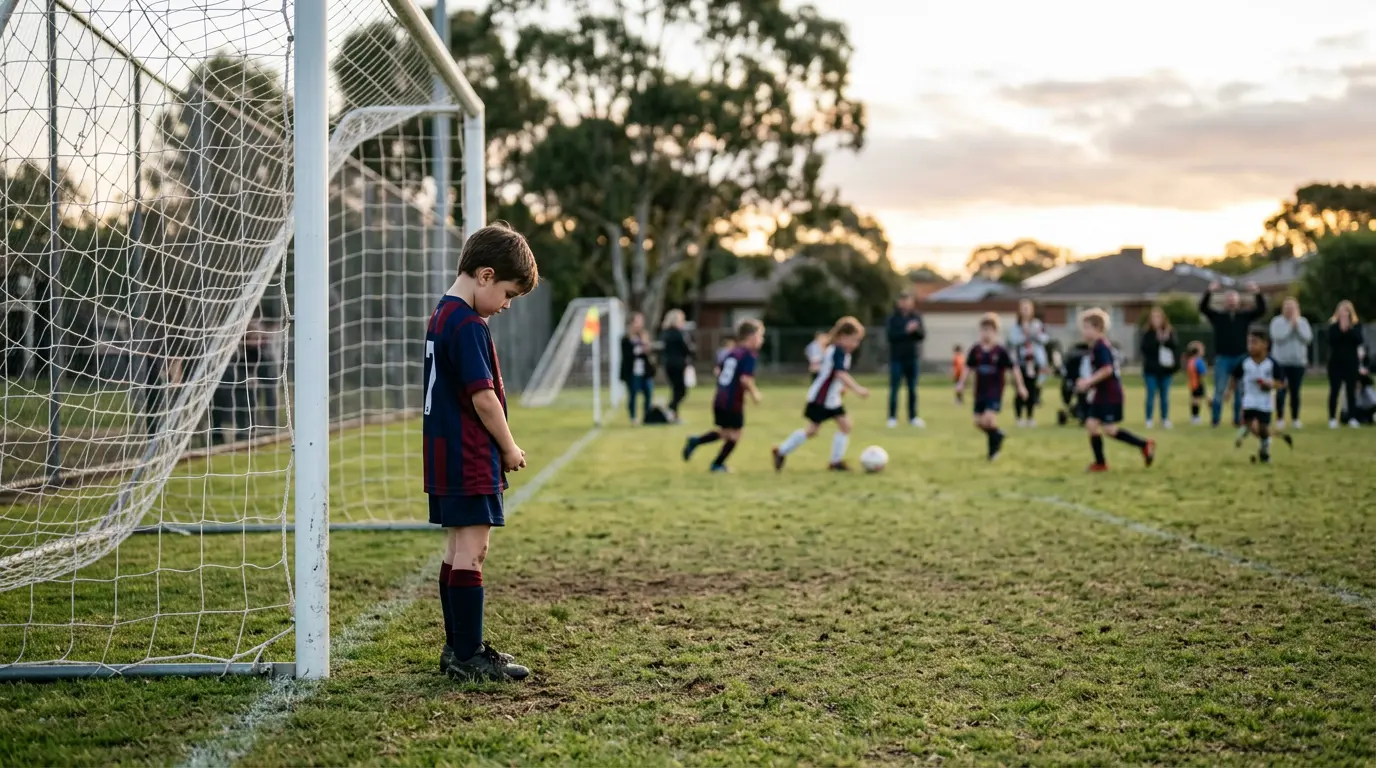
Your kid can't recover from a single mistake
Your nine year old gives the ball away in the first ten minutes and never recovers. They are physically present for the rest of the half but mentally checked out. What is happening, why it is age-typical to about 11, what works in the moment, and when to look for help beyond the sideline.
Read article →
Your kid loses it after mistakes. Here's what to try, in order.
Your eight-year-old misses an open goal and breaks down. Your eleven-year-old slams their boot into the post after letting one in. This is normal developmental territory. There is a sequence that helps in the moment without making it worse, and a list of things not to say. The instinct to fix it is the trap.
Read article →